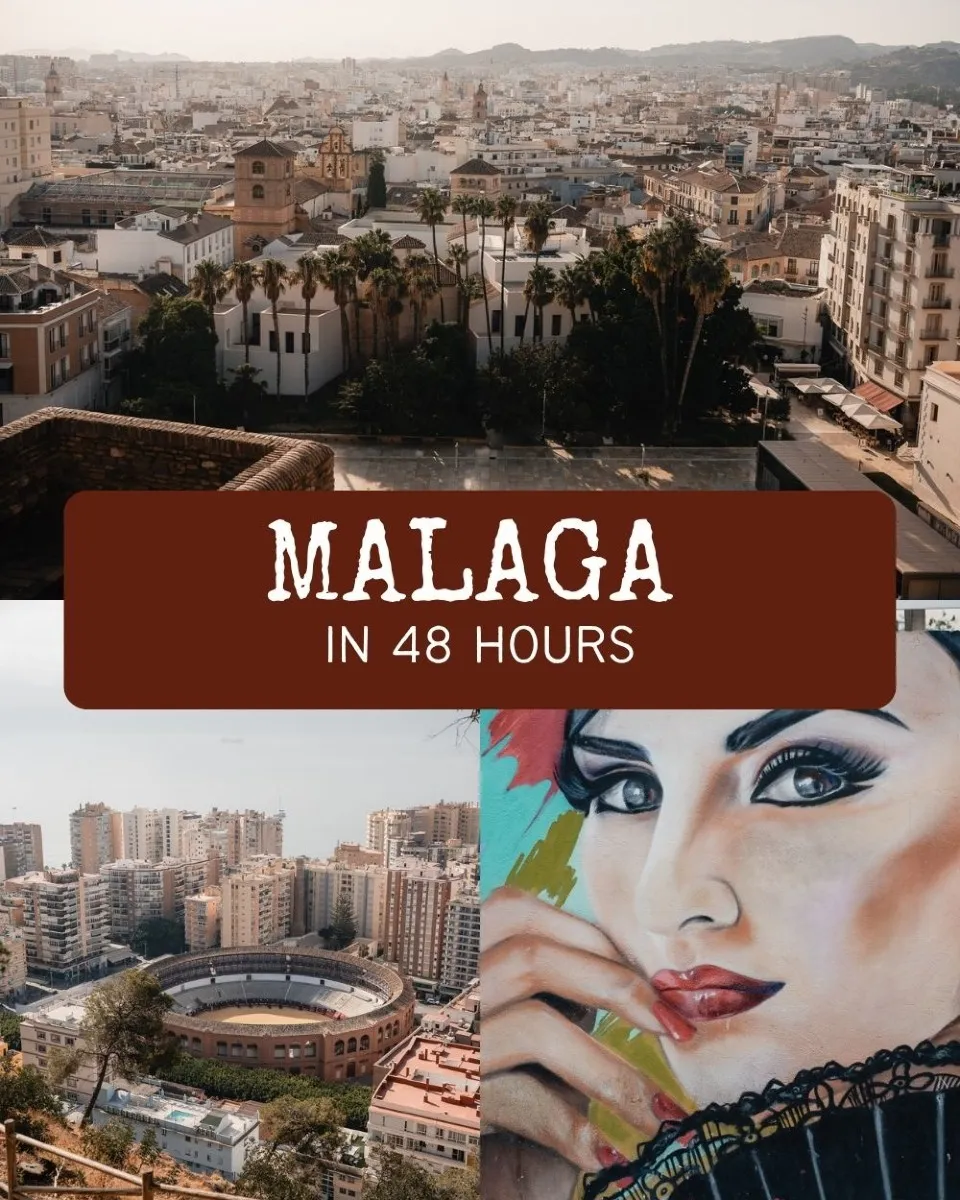
Málaga is often seen primarily as a starting point for a road trip through Andalusia. You pick up your rental car, drive towards the beaches or white mountain villages, and leave the city itself behind. However, Málaga is definitely worth exploring for at least one or two days.
This time, I only had 48 hours in Málaga. That turned out to be enough to discover a large part of the historic center, visit the Alcazaba and the Castillo de Gibralfaro, stroll along the modern harbor, and plan a photoshoot by the coast. At the same time, my stay felt way too short. Just for the museums, beaches, and day trips around Málaga, I could easily fill a few extra days.
In this article, I will take you along my personal route through Málaga, including the places where I ate, photographed, and stayed.
Arriving in Málaga and picking up a rental car
I flew in early September with a morning flight from Brussels Airport to Málaga. My flight departed around seven o'clock, and by ten o'clock, I was already in Spain.
Upon arrival, I immediately picked up my rental car from Goldcar at Málaga airport. Since I would be traveling further through Andalusia and towards Alicante after my stay, a rental car was the most convenient choice for me.
For just a city trip in Málaga, you actually don’t need a car. The historic center is compact, and many attractions are within walking distance of each other. A car is especially handy if you also want to visit beaches outside the city or places like Ronda, El Torcal de Antequera, and the white mountain villages.
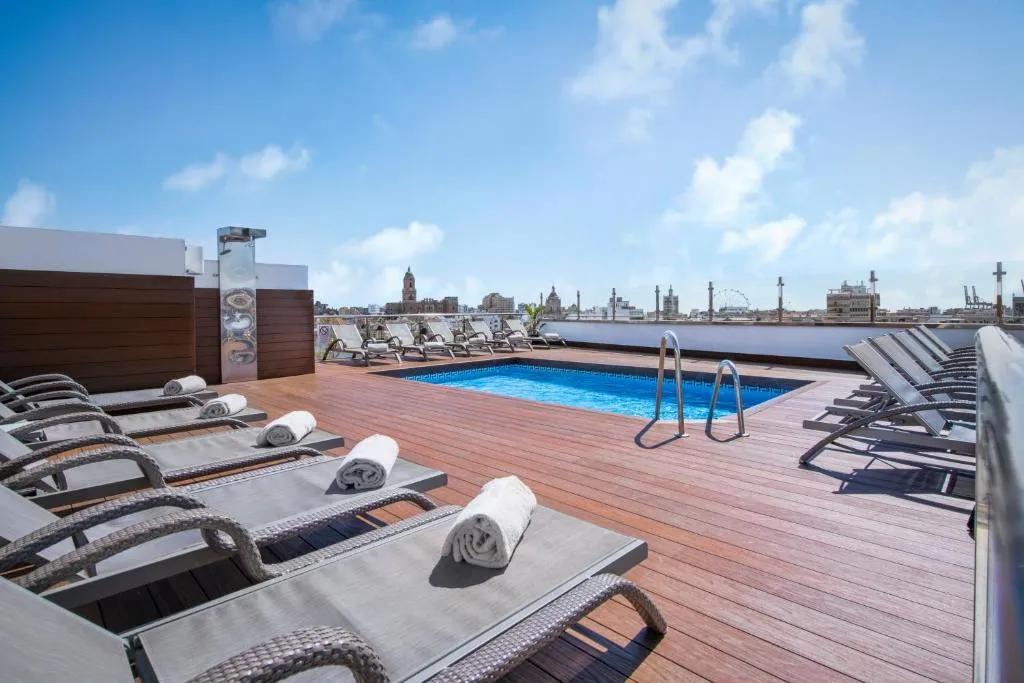
Staying at Sallés Hotel Málaga Centro
During my stay, I slept at Sallés Hotel Málaga Centro, close to the historic center.
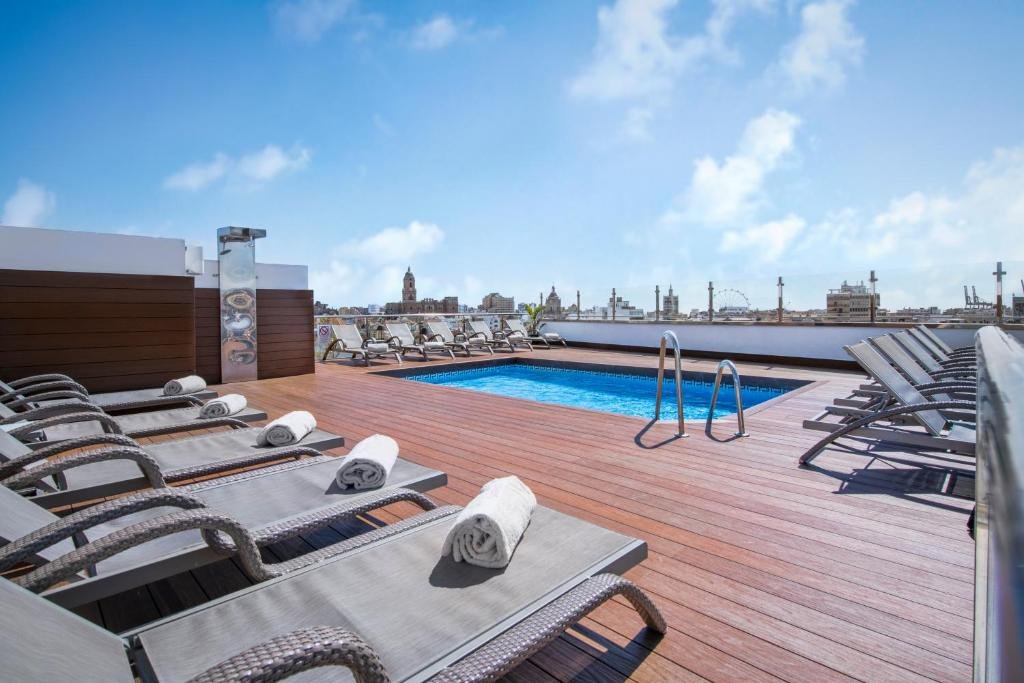
For a short city trip, I found the location very practical. From the hotel, I could easily walk towards the Mercado Central de Atarazanas, the shopping streets, and the old center. The hotel also has a rooftop with a pool and a view over the city.
Since I arrived early, I couldn’t check in right away. I temporarily parked my rental car at a nearby shopping center and left my luggage in the car. In hindsight, that may not have been my most relaxing decision, but it did give me the opportunity to head straight into the city.
After lunch, I picked up my car again, checked in, and took a little rest. That was a luxury I needed, as I had a photoshoot planned by the coast that same evening.
Start your visit at Mercado Central de Atarazanas
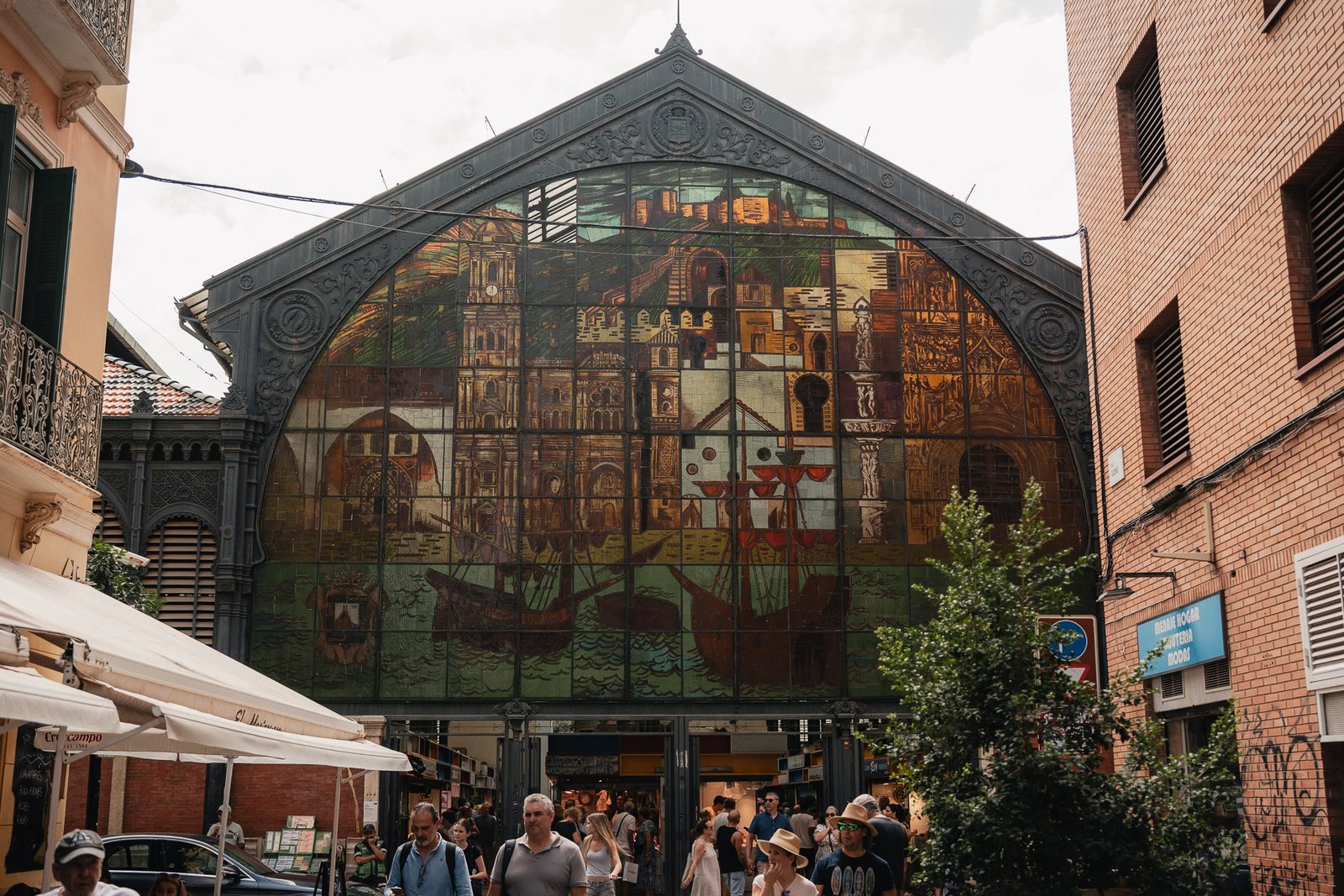
My first stop was the Mercado Central de Atarazanas, the most famous covered market in Málaga.
Local markets are always a nice introduction to a new city for me. You not only see what people are eating, but you also get a glimpse of daily life.
In the market hall, you will find stalls with fresh fish, vegetables, fruit, meat, Iberian ham, olives, and local ingredients. The market is now also popular with tourists, but it still feels like a place where locals come to do their daily shopping.
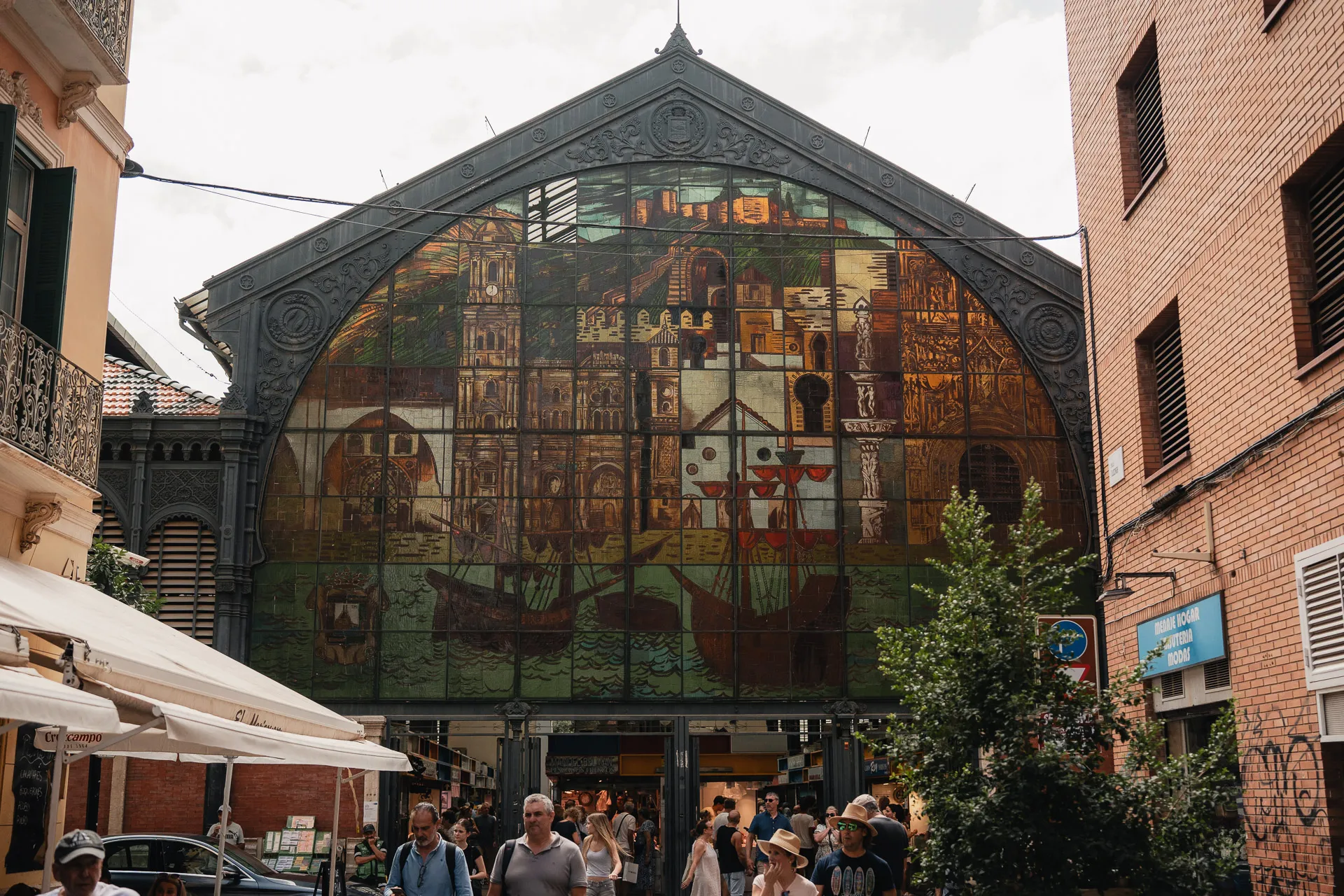
You don’t need to set aside half a day for this. Stroll leisurely through the various aisles, maybe taste something small, and be sure to check out the colorful stained glass wall at the back of the building.
My tip: visit the market in the morning or around lunchtime. Many stalls close later in the day.
Walk via Calle Marqués de Larios to the historic center
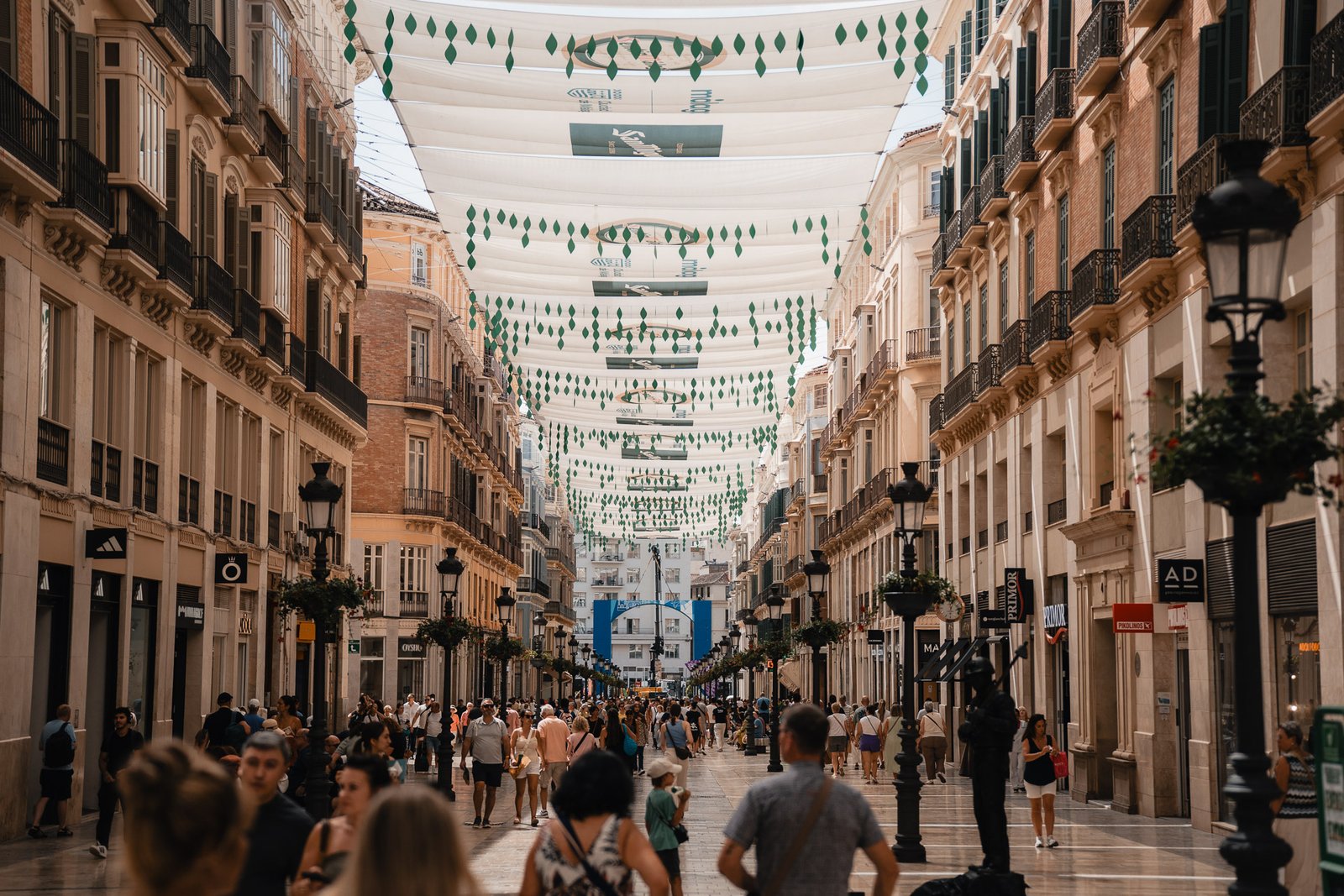
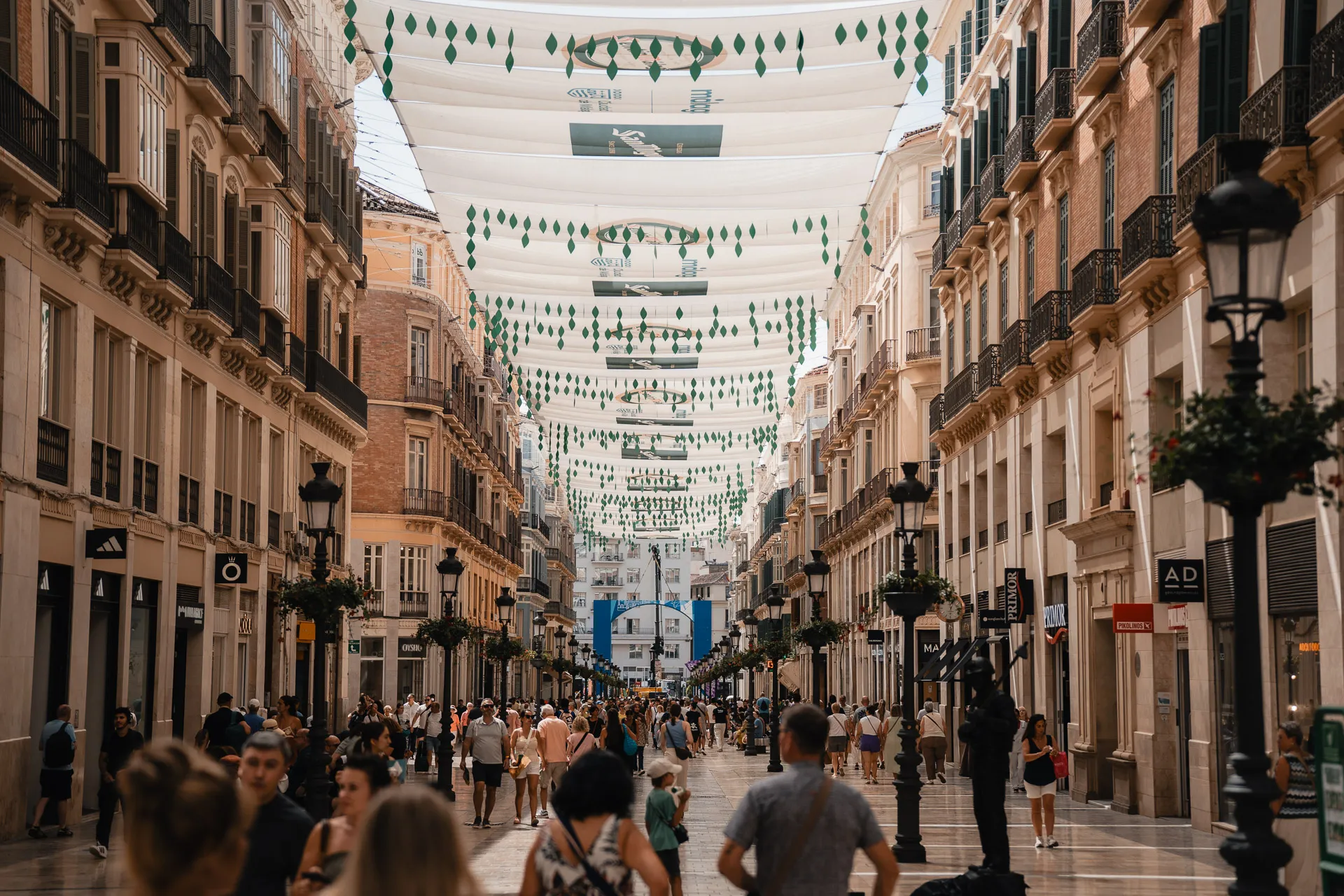
From the market, I walked further towards Calle Marqués de Larios, the most famous shopping street in Málaga.
The street itself is wide, stately, and completely car-free. However, I found the side streets particularly interesting. When you walk all the way down Calle Larios, you end up at Plaza de la Constitución, a lively square in the middle of the historic center.
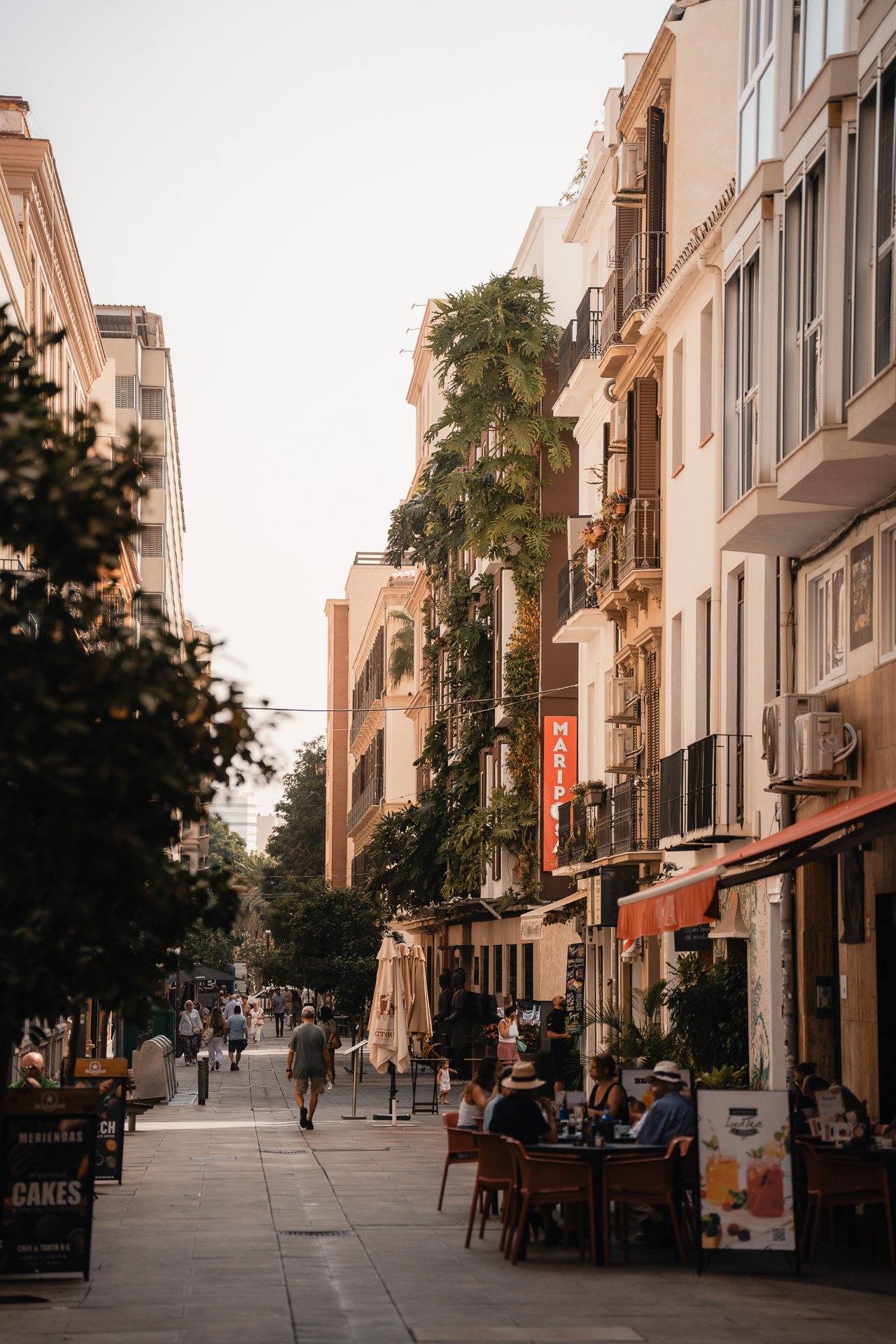
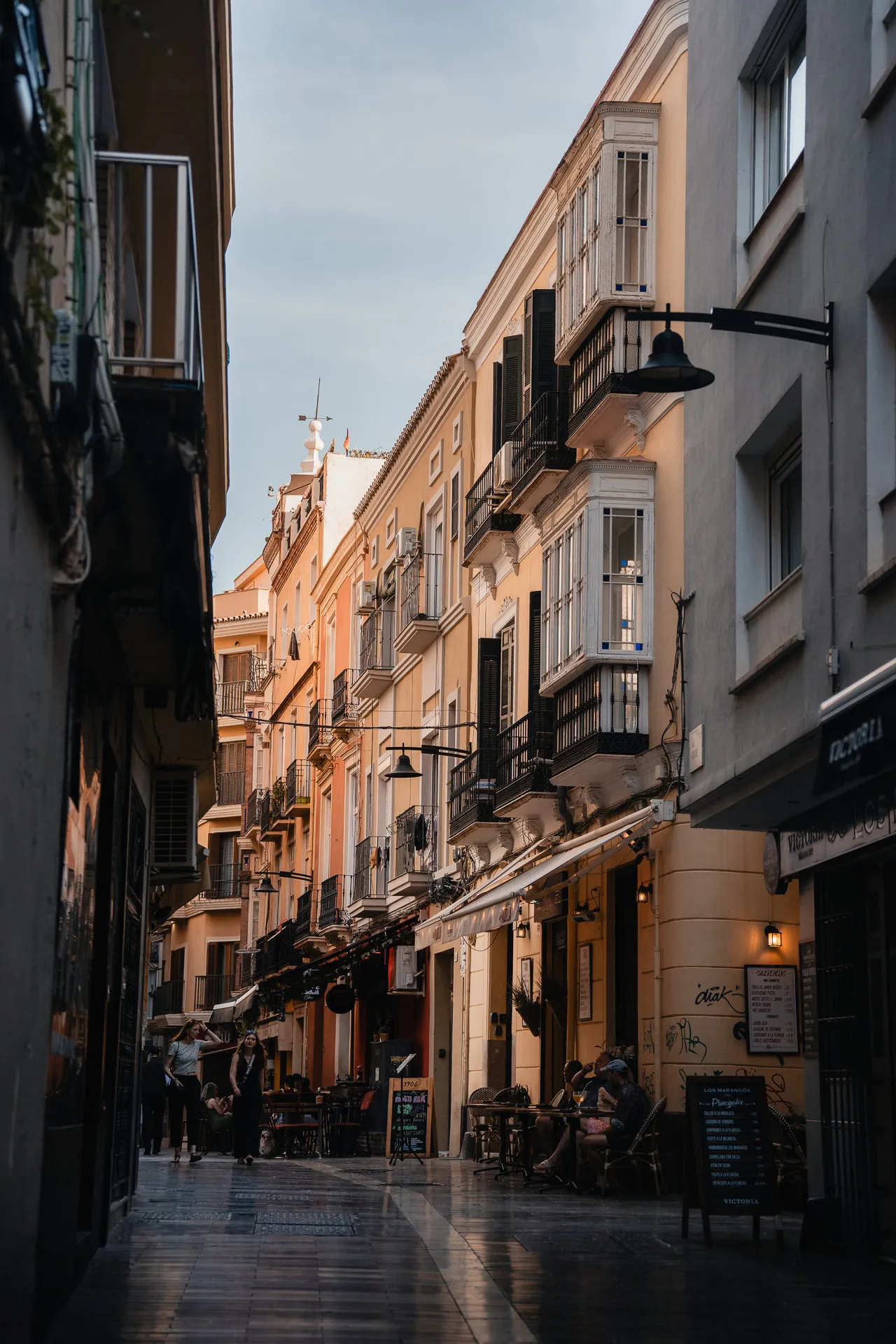
From here, you can actually continue walking without a fixed plan. In almost every direction, you will find narrow streets, cozy squares, colorful facades, and terraces.
That is one of the things I enjoyed most about Málaga: the main attractions are close to each other, making it very easy to explore the city on foot.
Plaza de la Constitución and the Museo Carmen Thyssen
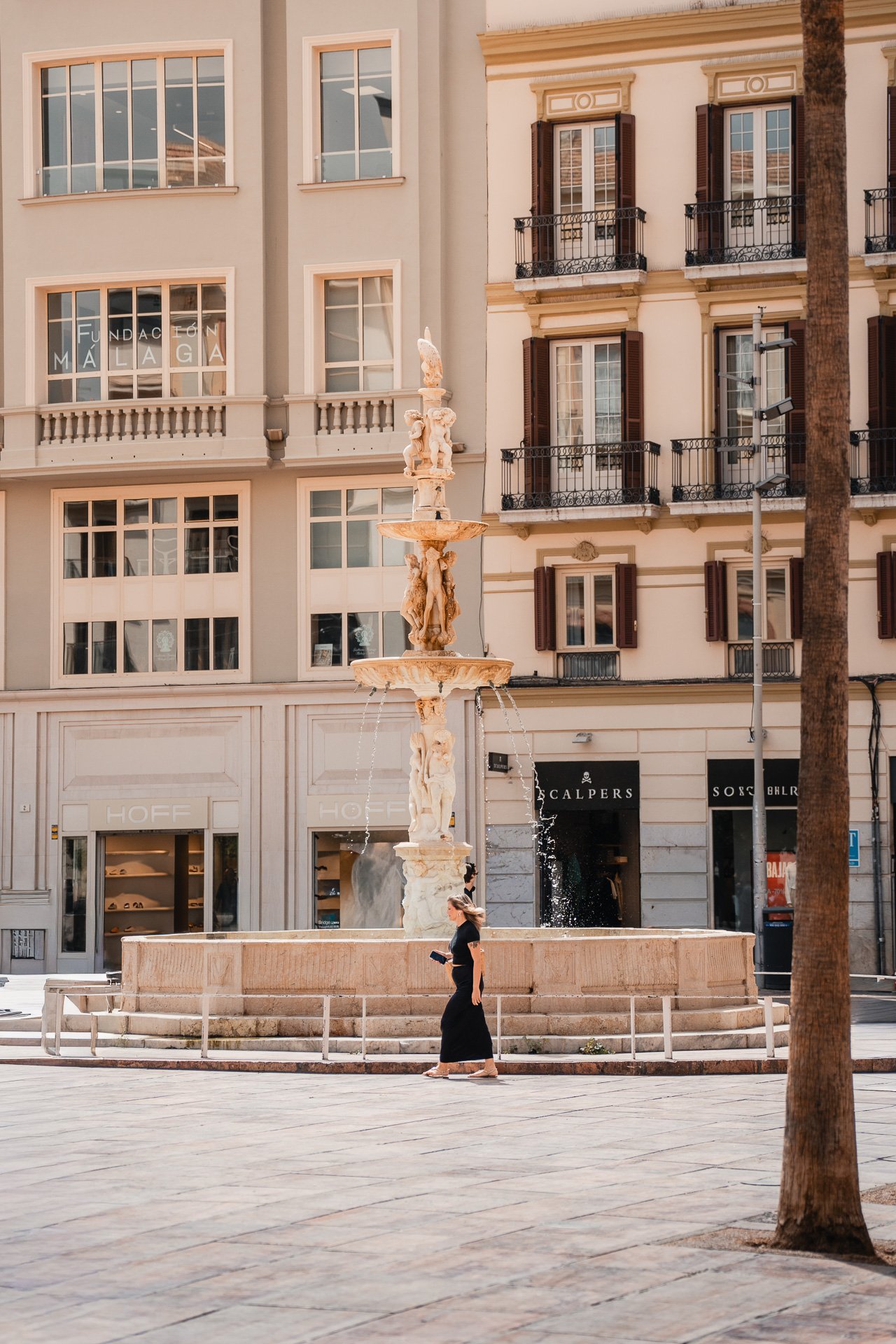
At Plaza de la Constitución, you will find among other things the Museo Carmen Thyssen Málaga. The collection mainly consists of Spanish and Andalusian art from the nineteenth century.
I personally did not go inside because I only had two days in Málaga and wanted to see as much of the city as possible. However, the museum is high on my list for a future visit.
Málaga has surprisingly many museums. Besides the Carmen Thyssen Museum, you will also find the Picasso Museum, the Centre Pompidou Málaga, and the Museo de Málaga.
Those who come primarily for art and culture can easily fill an entire day just with museums.
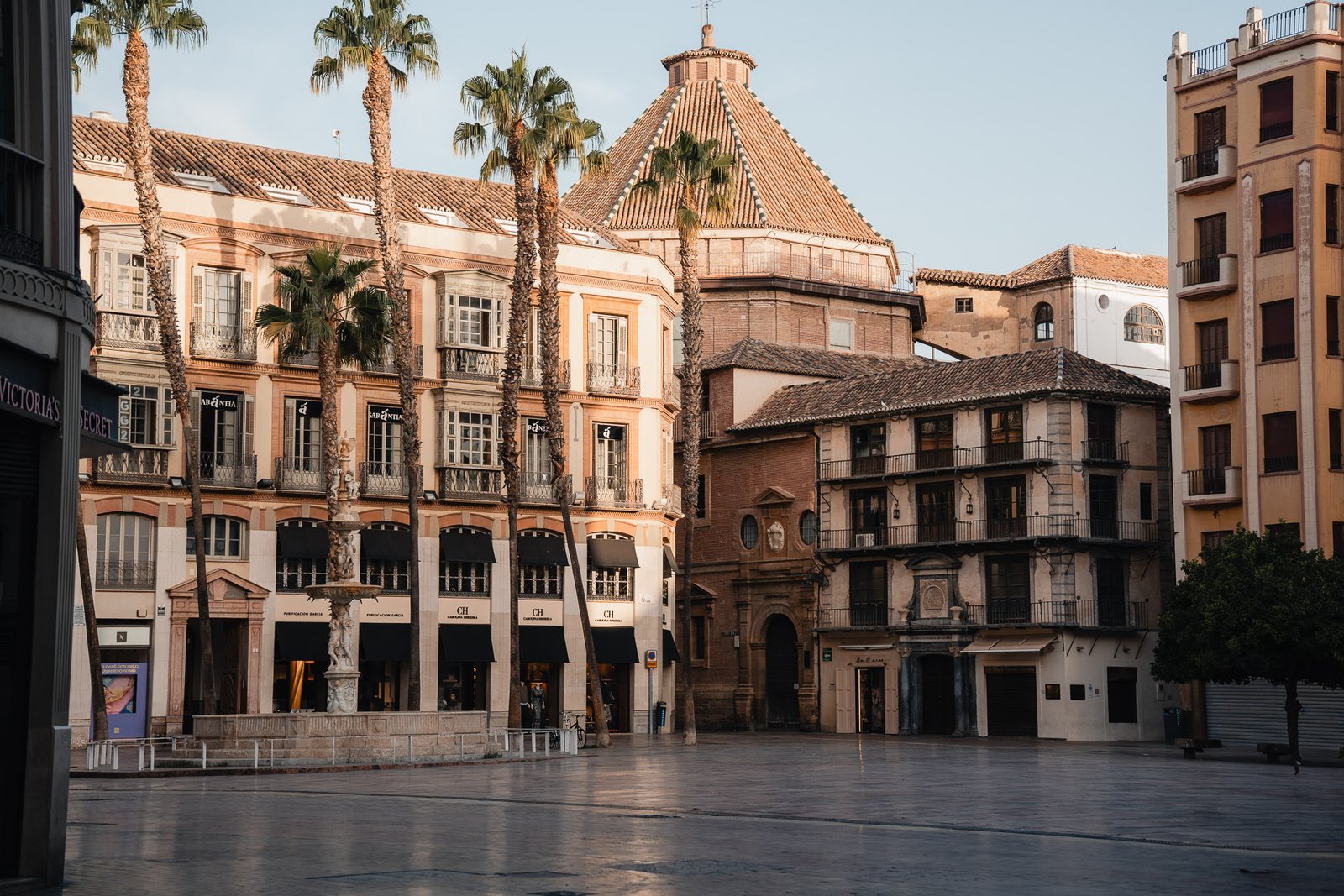
Lunch at Taberna El Globo
After my first walk through the center, I stopped for lunch at Taberna El Globo.
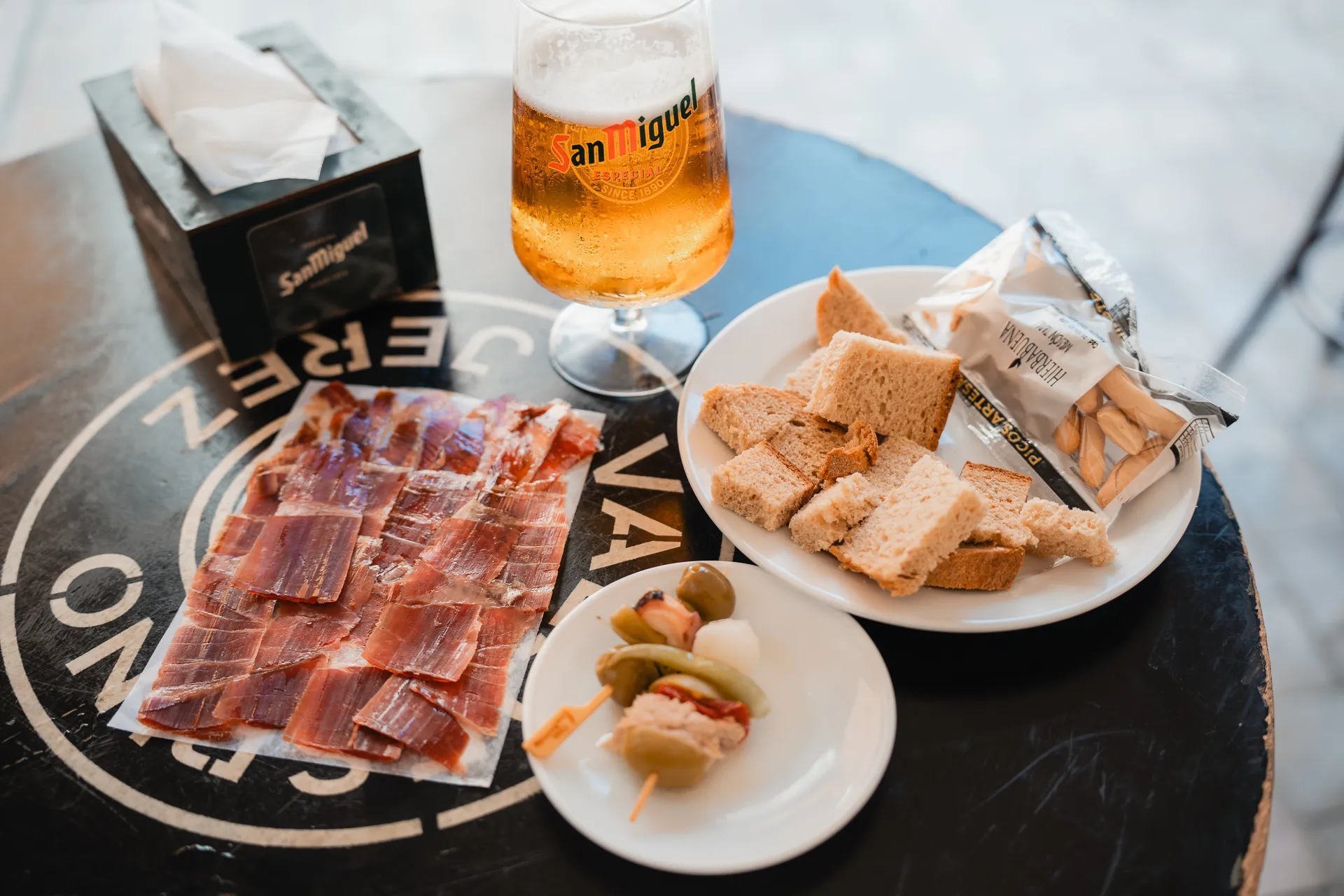
The restaurant is located in a slightly quieter area and felt less touristy during my visit than many places around the most famous squares. I ordered several tapas, including Iberian ham and patatas bravas.
The lunch was simple but very tasty. Exactly what I was looking for at that moment: an informal place where you can sit quietly without immediately ending up in a large tourist dining street.
Tip: when visiting Málaga, also look beyond the busiest squares. In the smaller streets, you often find quieter tapas bars that are just as good.

Sunset and a photoshoot at Playa del Peñón del Cuervo
After checking in and a short break, I drove at the end of the day to Playa del Peñón del Cuervo, east of the center of Málaga.
I had arranged to meet Lore and Jorge for a couple's shoot during sunset.
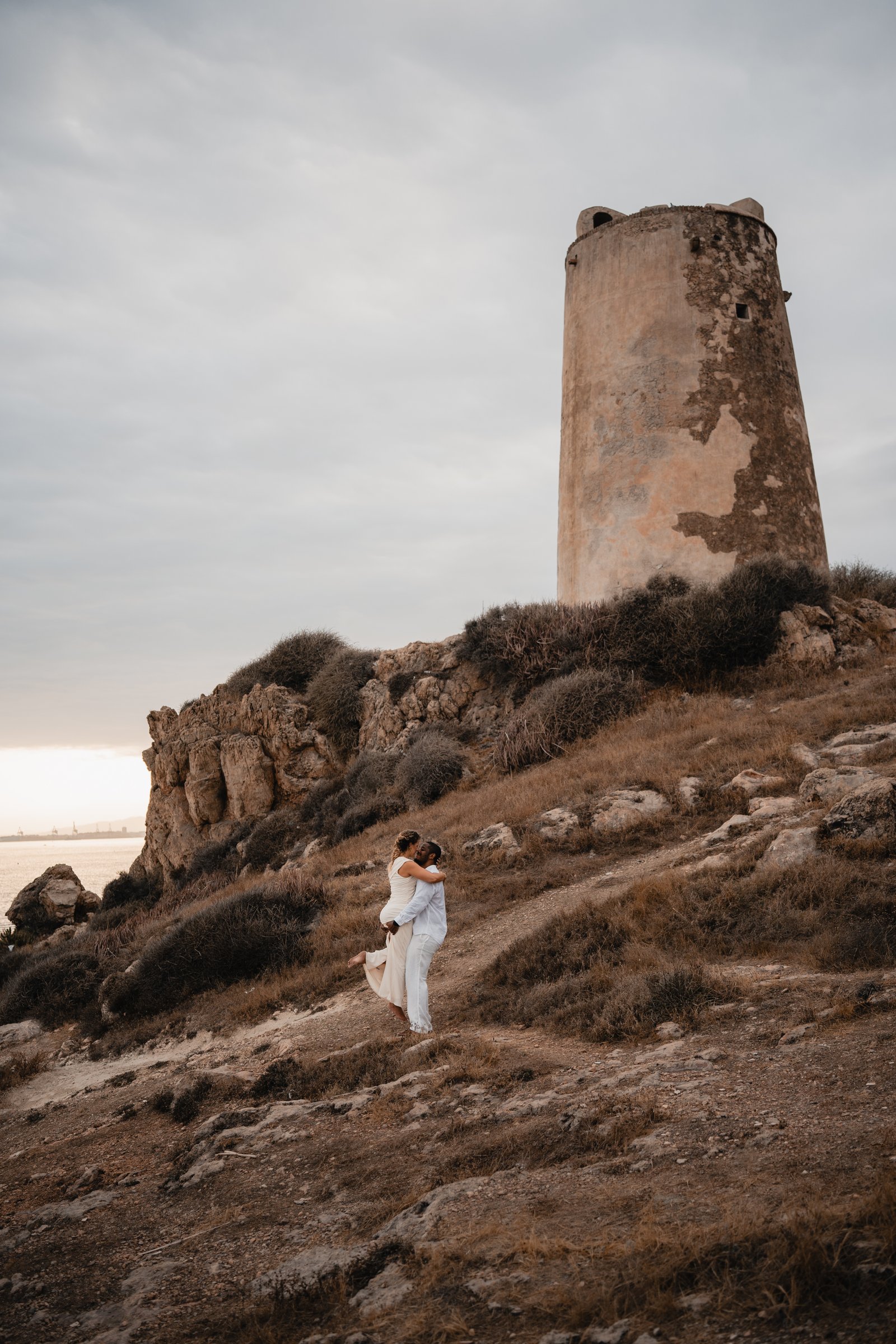
We started at an old watchtower on the cliffs. From this area, you have a beautiful view over the rocky coast and the Mediterranean Sea. Especially during the last warm light of the day, this was a stunning place to photograph.
Afterwards, we drove further to Playa del Peñón del Cuervo. The beach owes its name to the large rock that juts out of the water just off the coast. The beach runs towards the rock on both sides, creating interesting lines and compositions for photos.
It’s not a classic paradise sandy beach, but rather the rock, the coastline, and the view that make this place so photogenic.
After the photoshoot, I returned to my hotel. It had been a long day, so there was not much more to do than look at and select my photos.
Day two: Photographing Málaga in the early morning
The next morning, I got up early to walk through the center again.
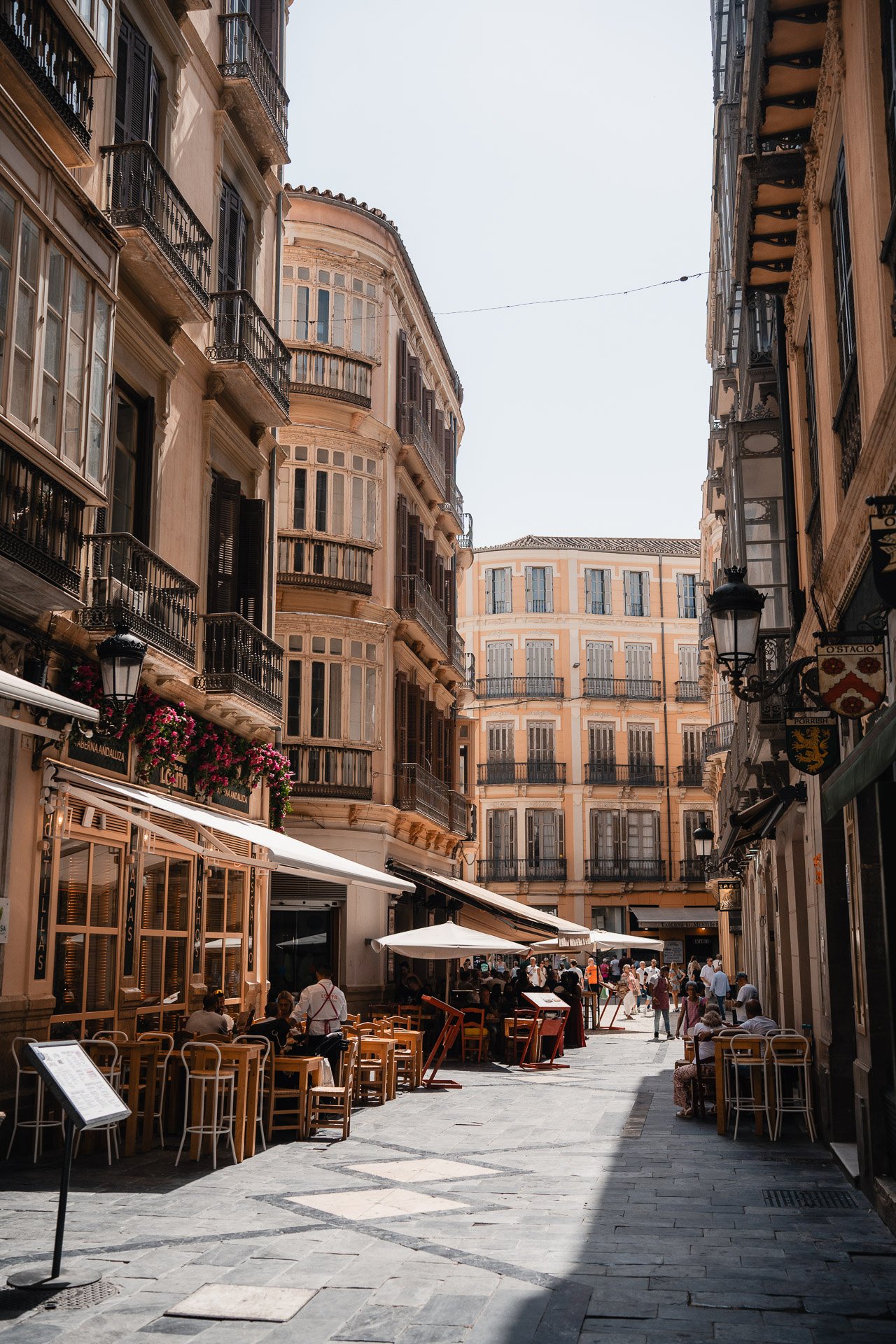
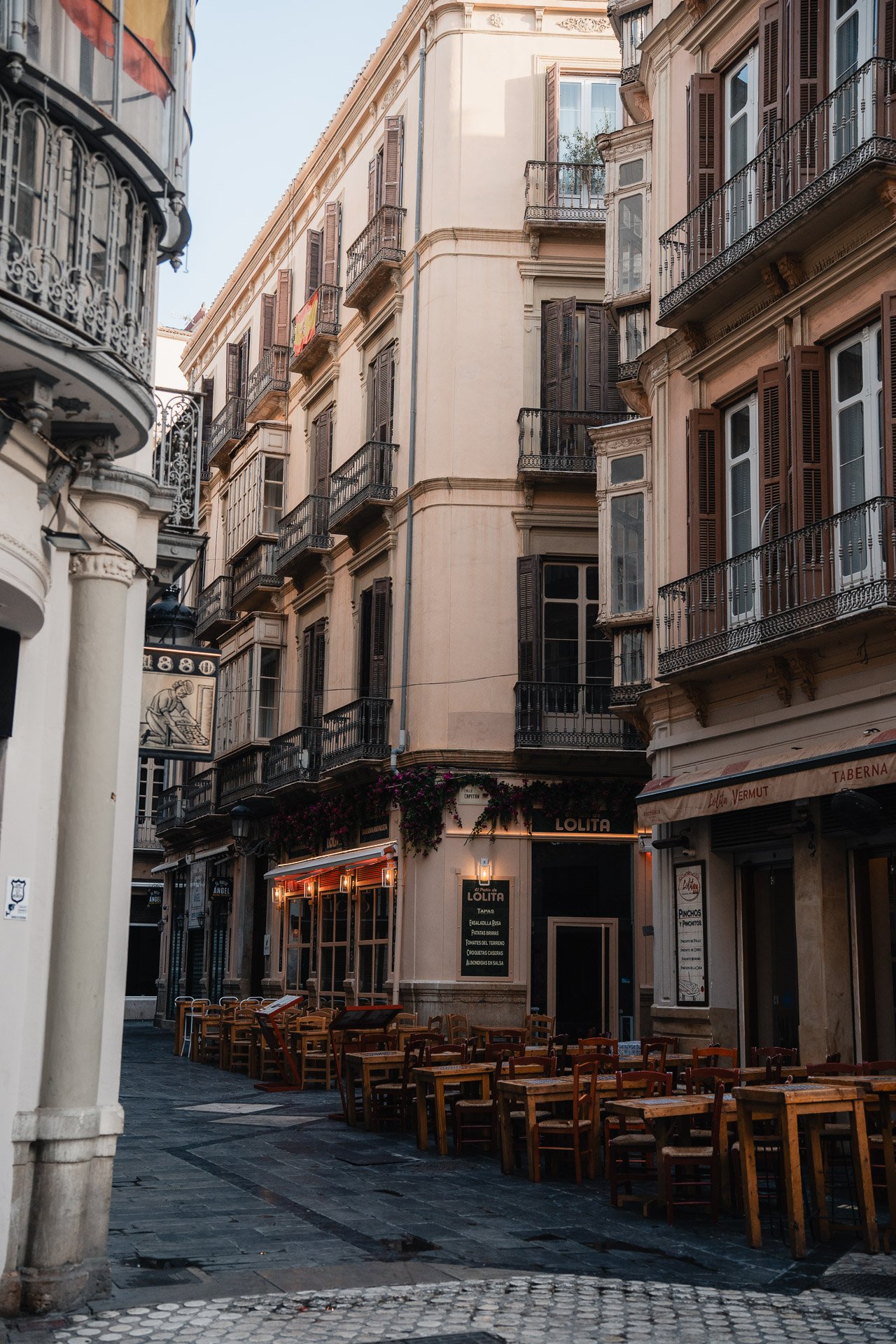
As a photographer, I almost always try to explore popular cities early in the morning. The light is softer, the temperature more pleasant, and you mostly have the streets to yourself.
This makes a big difference in Málaga. Later in the day, the central shopping streets and squares quickly fill up with tourists, shoppers, and terraces.
In the morning, I could photograph how the sunlight appeared between the narrow streets and tall buildings. The warm light against the colorful facades gave the city a completely different vibe than in the afternoon.
After my morning walk, I returned to my hotel. Since it became very warm during the day in early September, I took a short siesta in the afternoon.
Visit the Alcazaba of Málaga
Later in the afternoon, I went outside again. I initially hesitated whether to visit the Picasso Museum, but since I had little time, I ultimately chose the Alcazaba of Málaga.
That turned out to be a good choice because I arrived about an hour before closing time, making it much quieter.
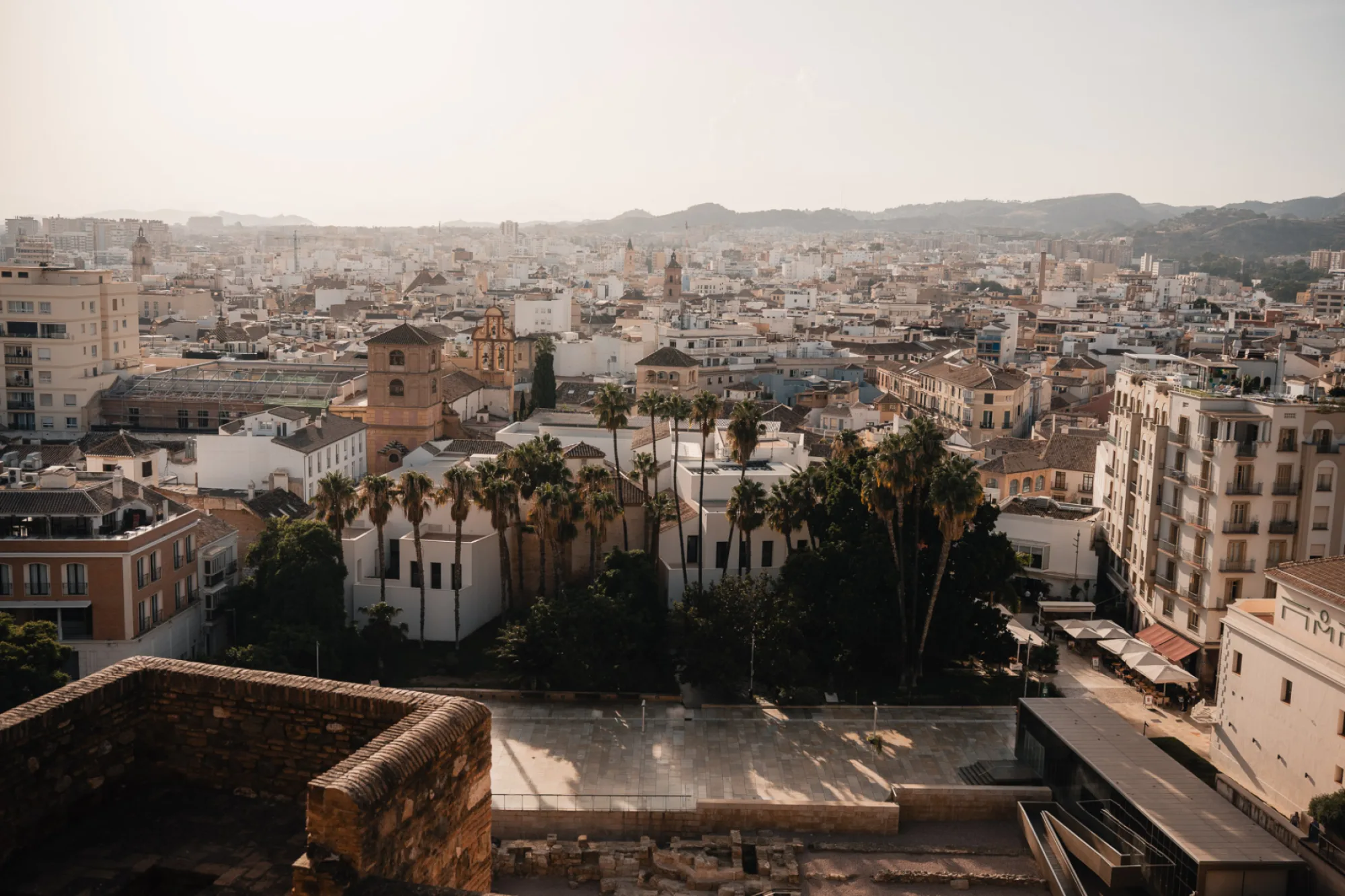
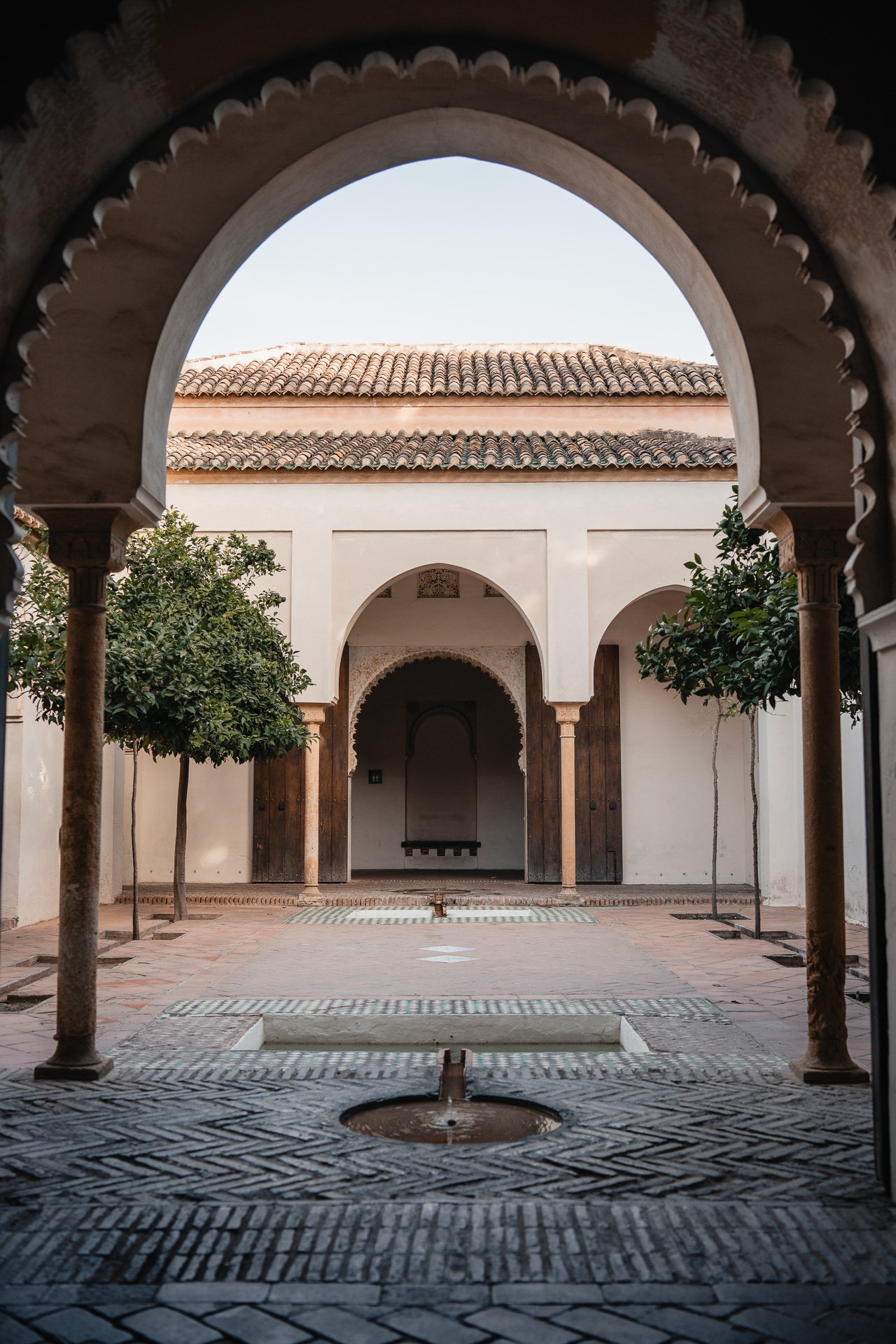
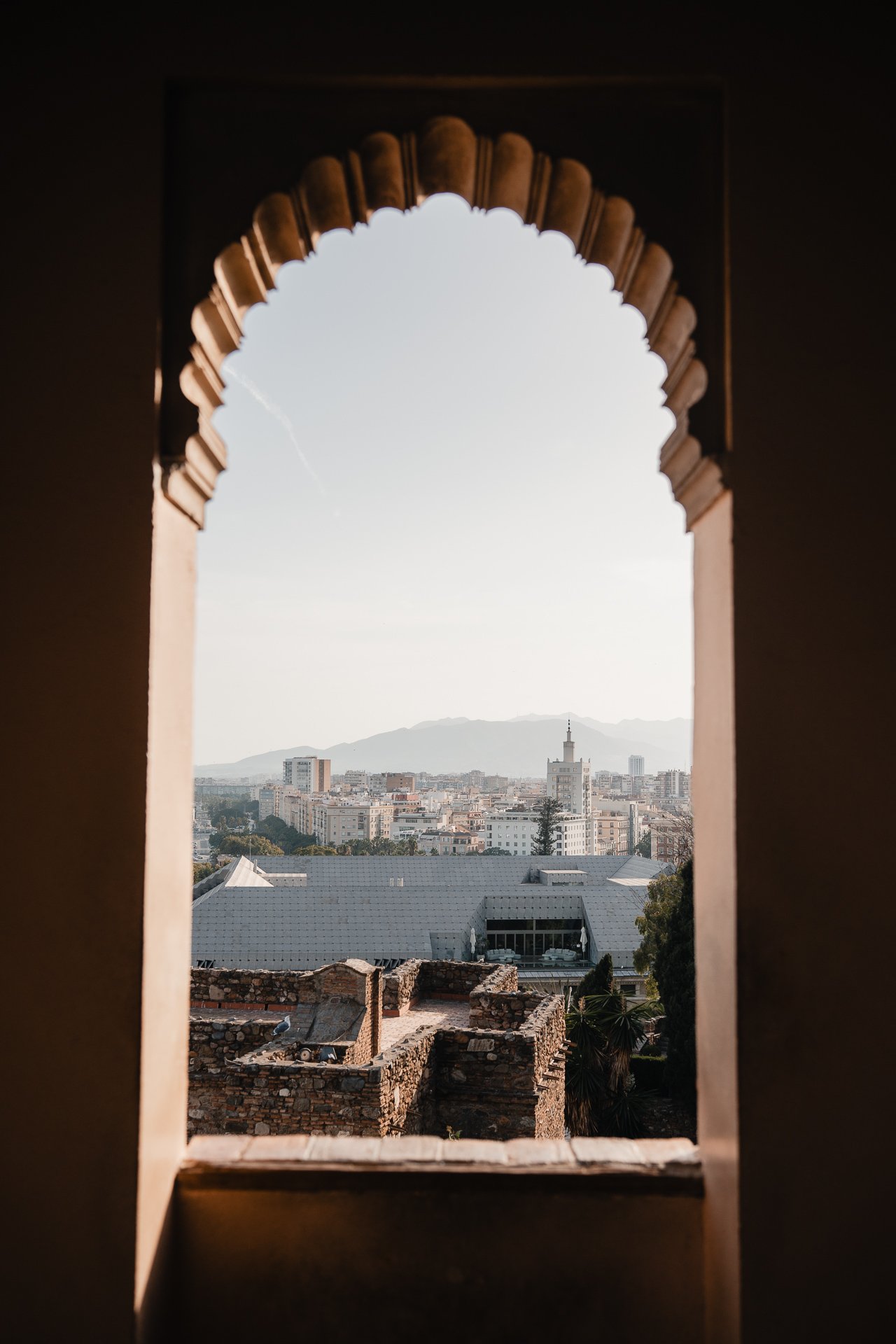
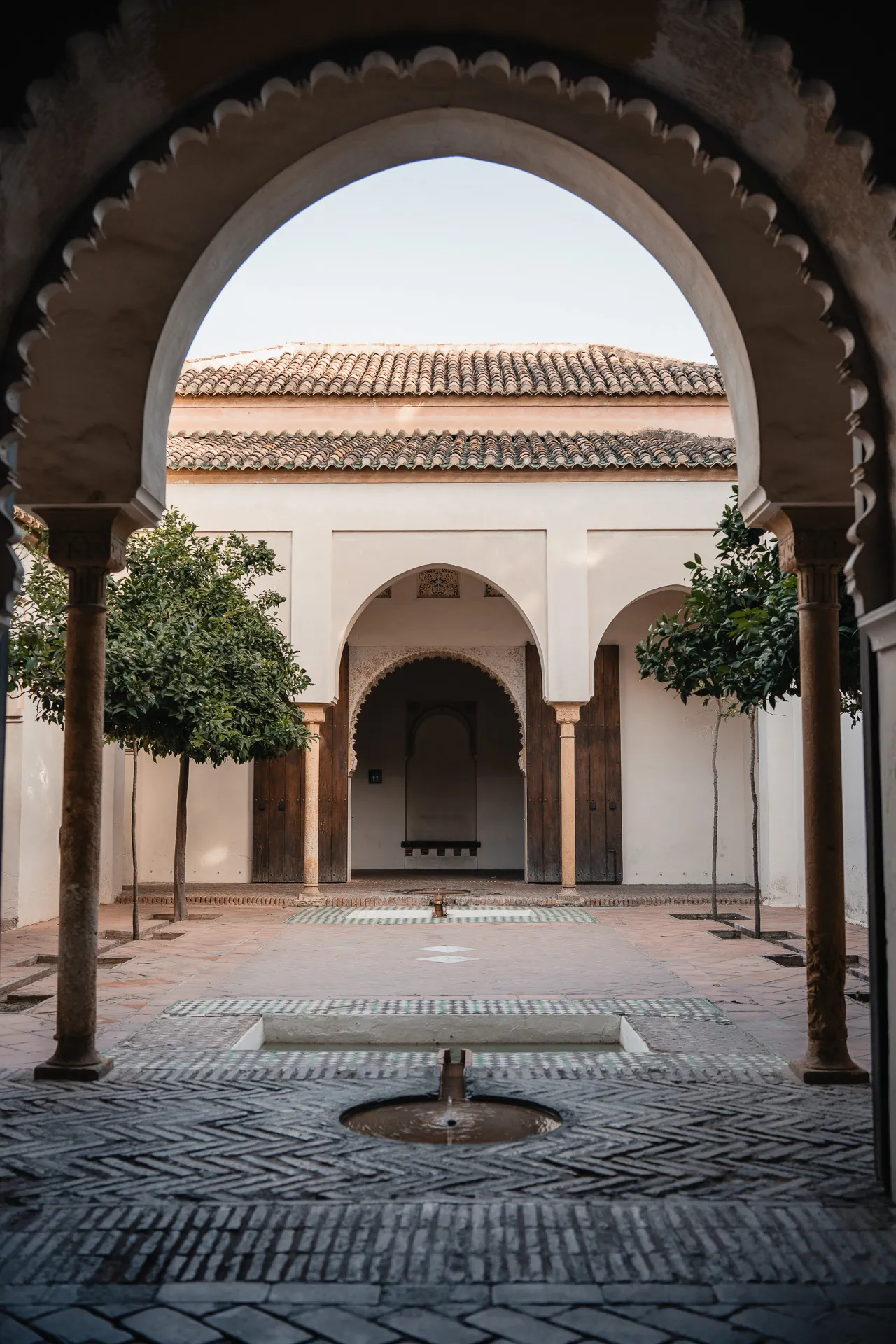
The Alcazaba is a Moorish palace and fortress located on a hill above the city. Inside, you walk along ancient defensive walls, gates, gardens, fountains, and courtyards.
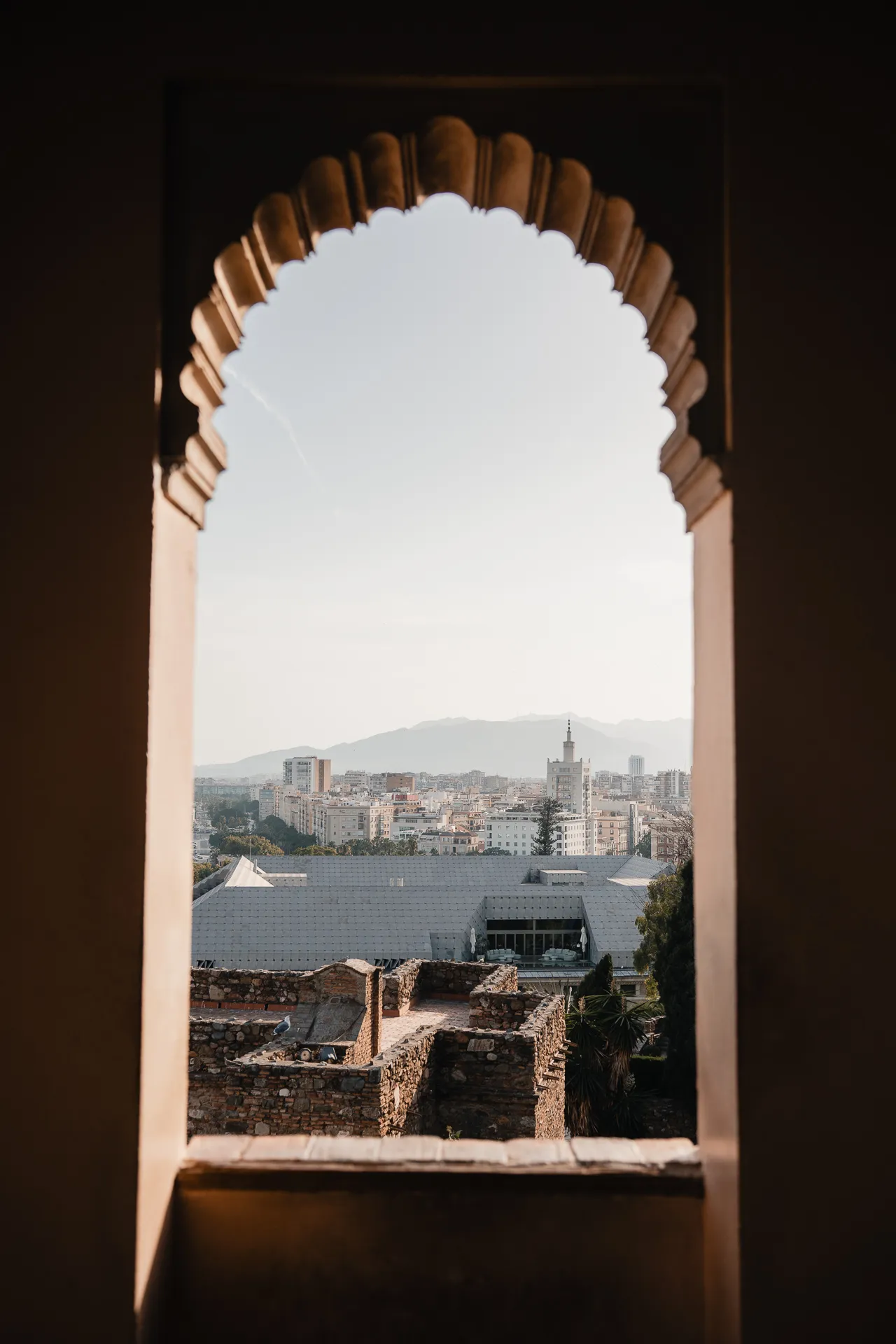
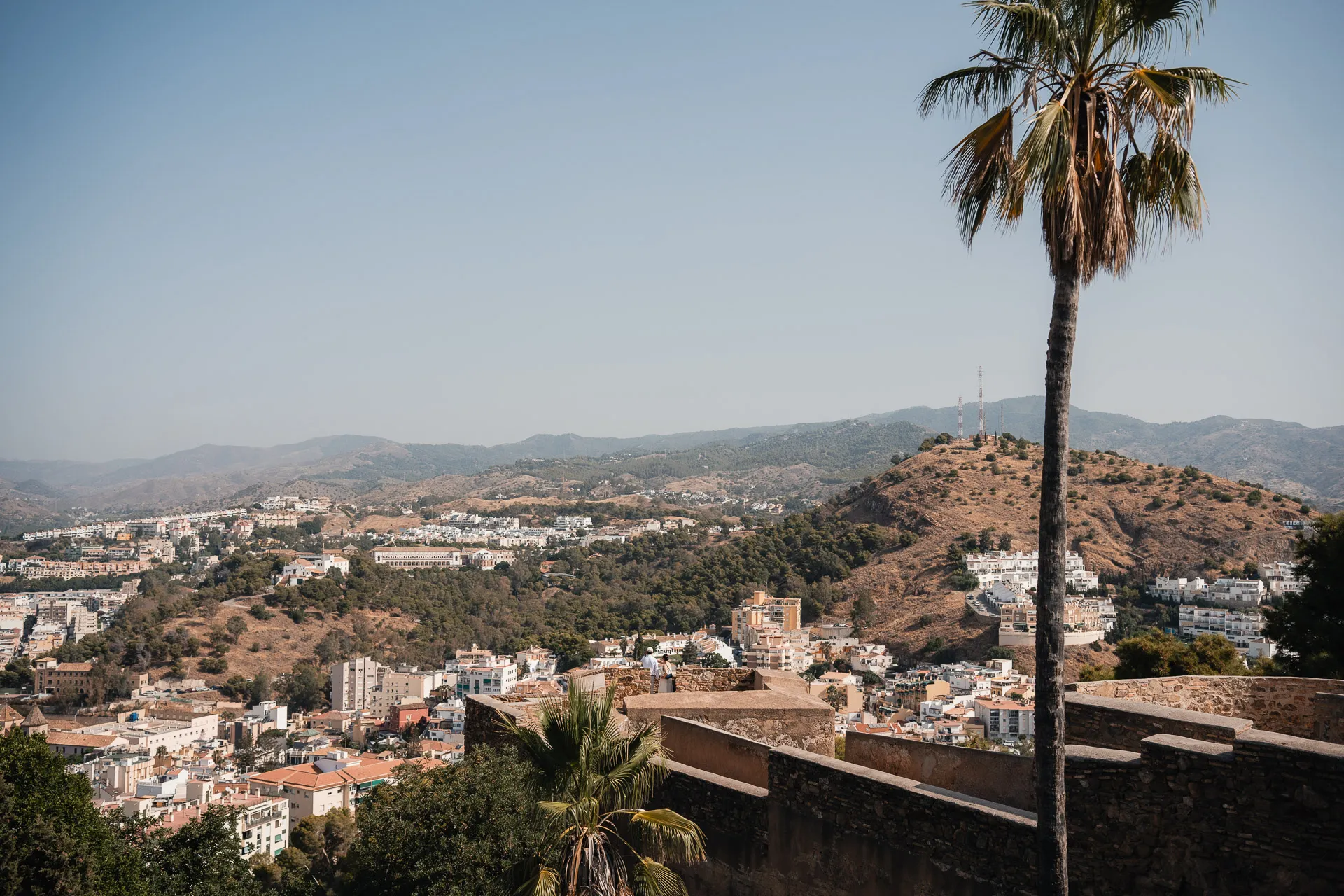
From various spots, you have views over Málaga, the harbor, and the surrounding hills. The complex also feels larger than you would expect from the city.
The official city website treats the Alcazaba and the higher Castillo de Gibralfaro as two separate monuments. You can buy individual tickets or combine both.
Since I arrived just before closing time at the Alcazaba, it was no longer possible to visit Castillo de Gibralfaro. Fortunately, with the combined ticket, I could also visit Castillo de Gibralfaro the following day.
I would do that again. The Alcazaba deserves at least one to one and a half hours, especially if you enjoy photography and regularly stop at the viewpoints.
Good to know: in the summer, the Alcazaba and Gibralfaro are generally open from 09:00 to 20:00, with the last entry an hour before closing. Always check the current opening hours before your visit.
Stroll through Parque de Málaga
After my visit to the Alcazaba, I continued my walk through Parque de Málaga.
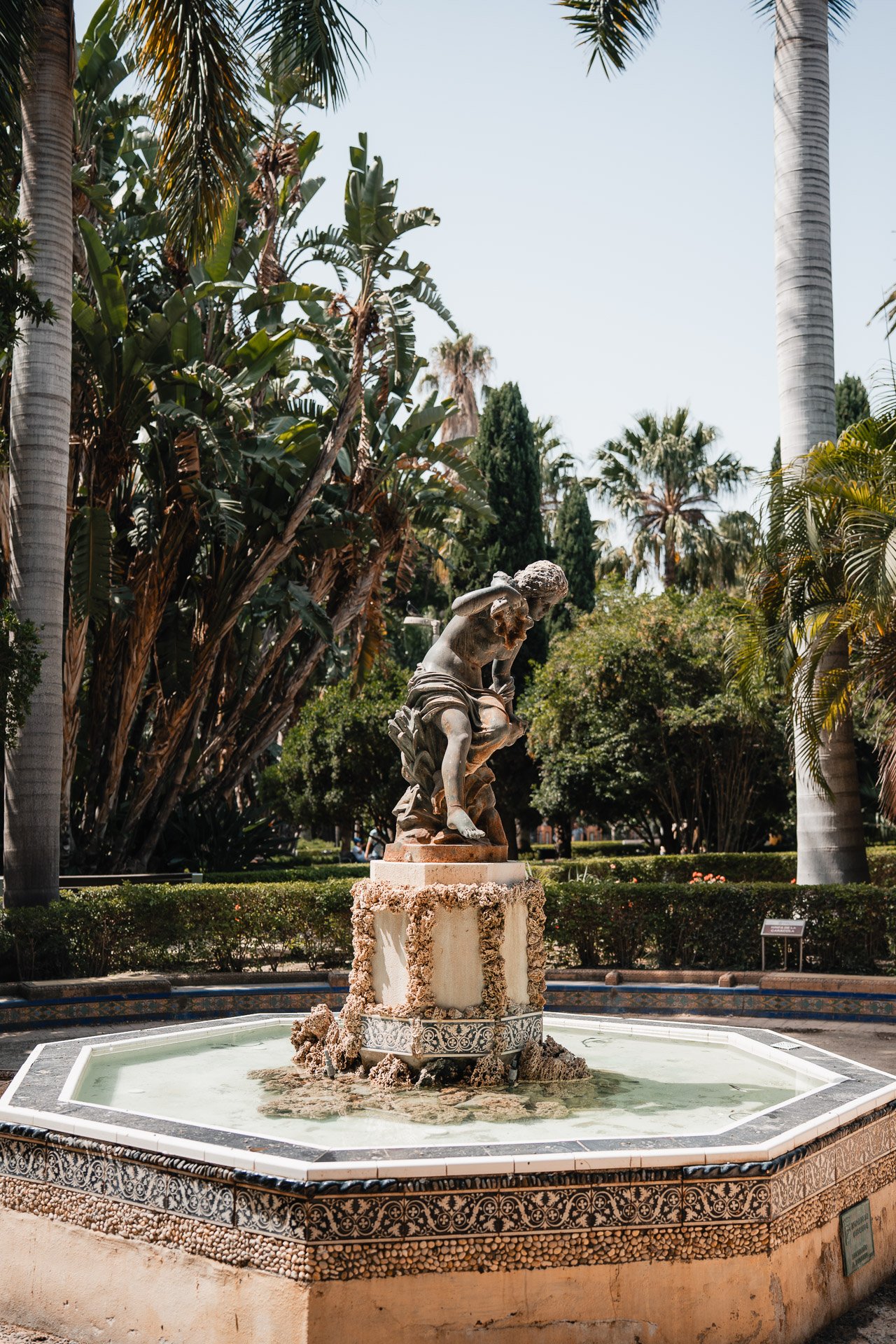
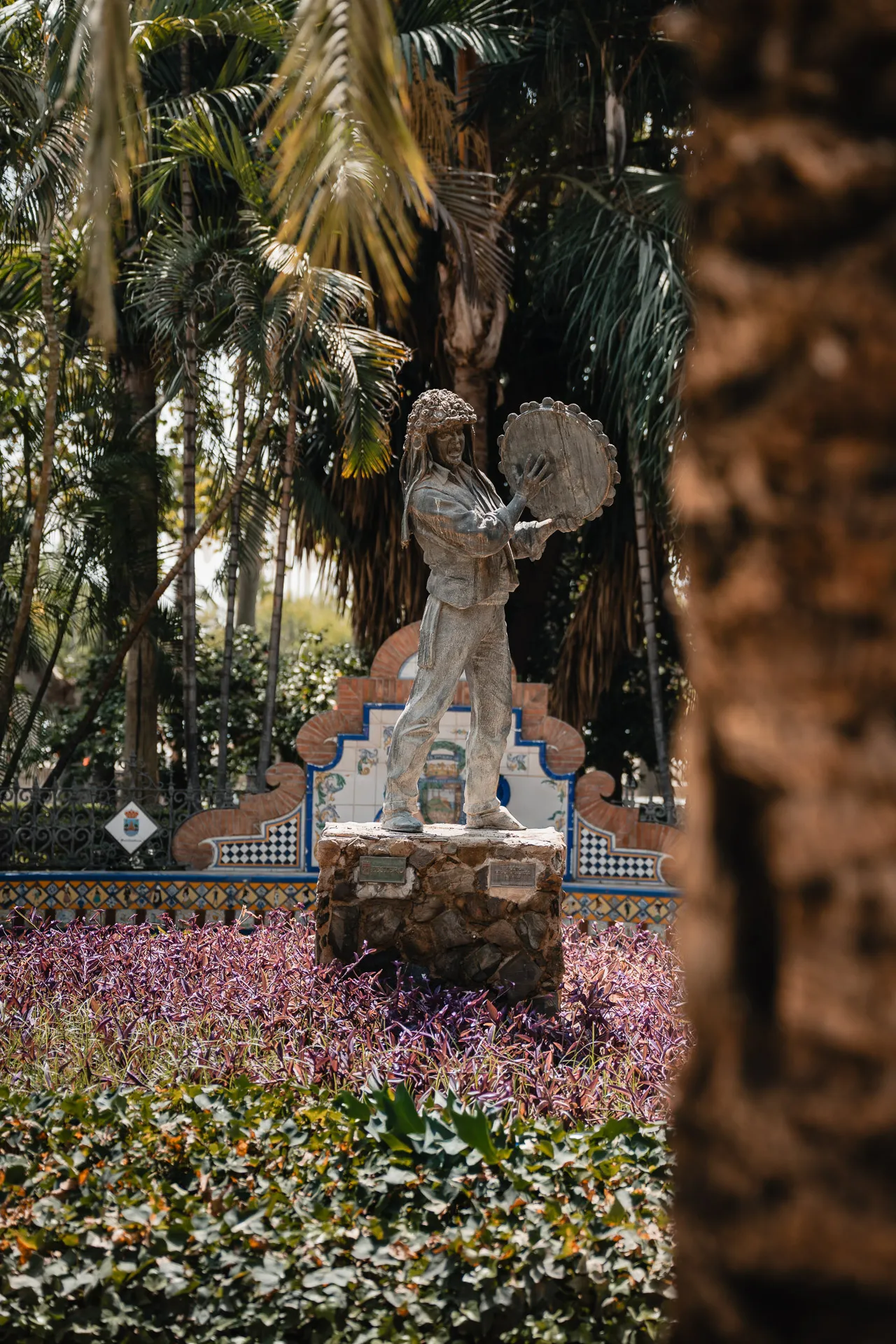
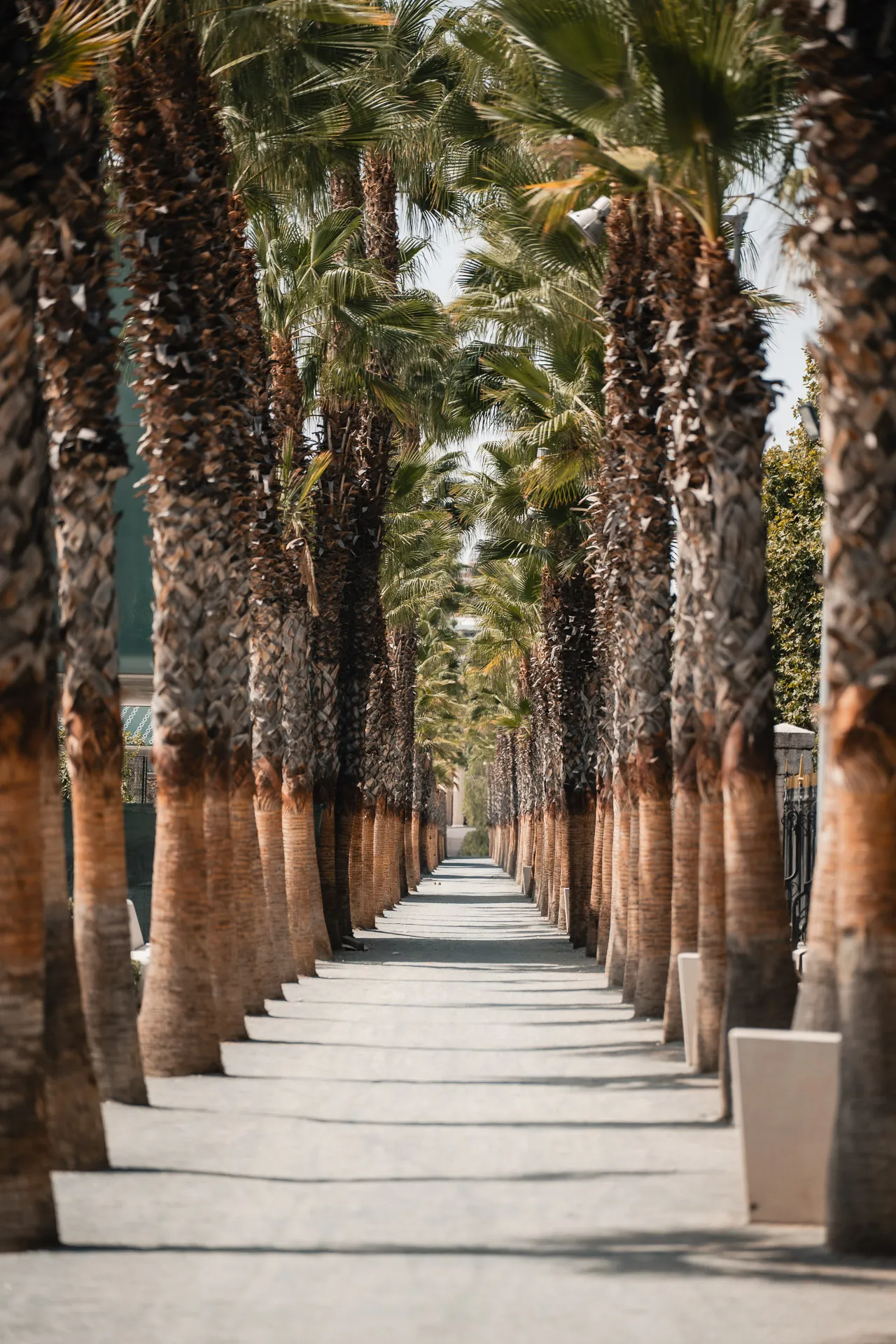
The park is located between the historic center and the harbor and provides a pleasant, green passage through the city. You walk under palm trees and alongside tropical plants, sculptures, and fountains.
Especially on warm days, it’s nice to take a break from the full sun here.
The park is longer and larger than I had expected. You can easily combine it with the Alcazaba, the cathedral, and the harbor.
Admire the cathedral of Málaga
From the park, I walked through the smaller streets to the Catedral de la Encarnación de Málaga.
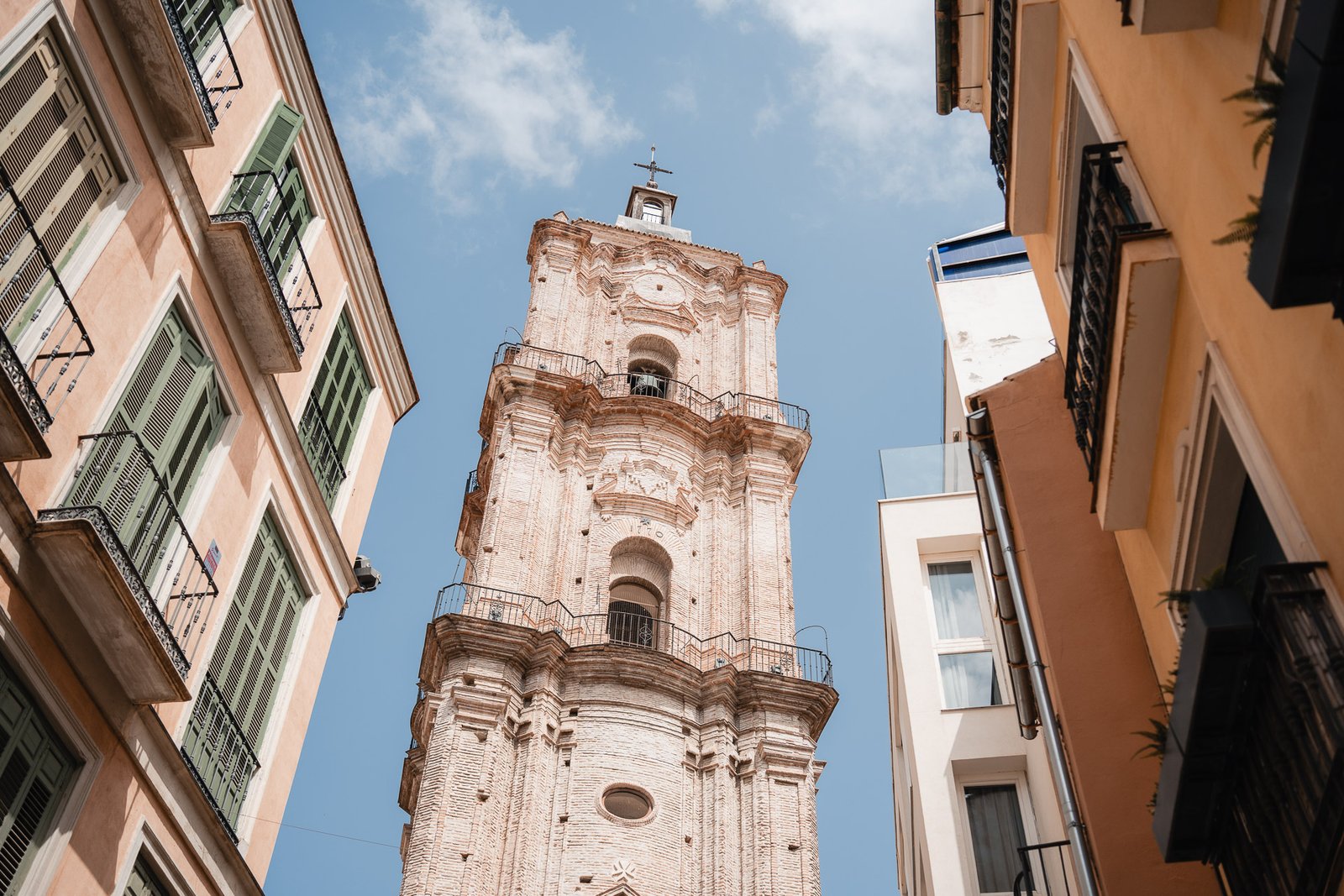
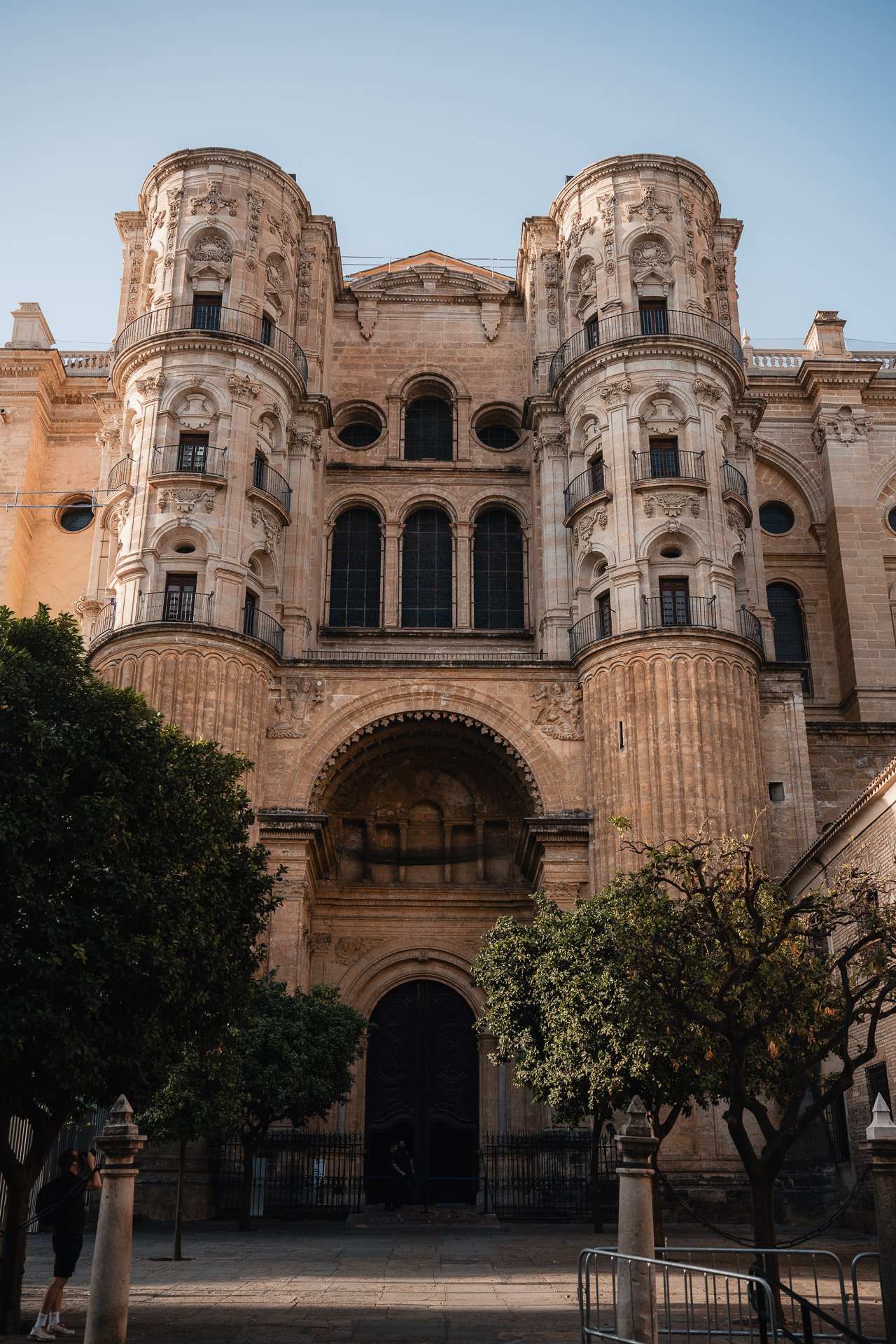
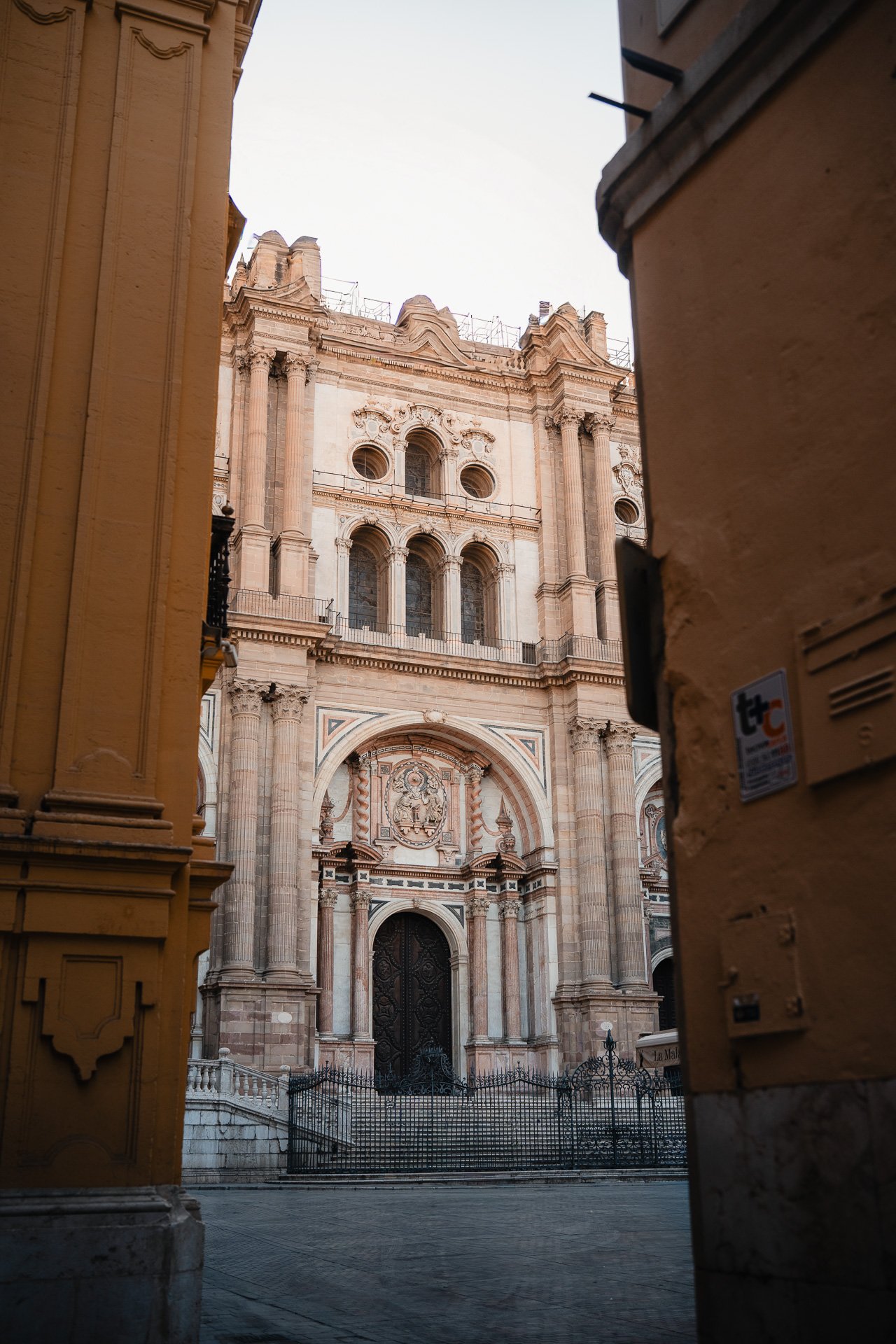
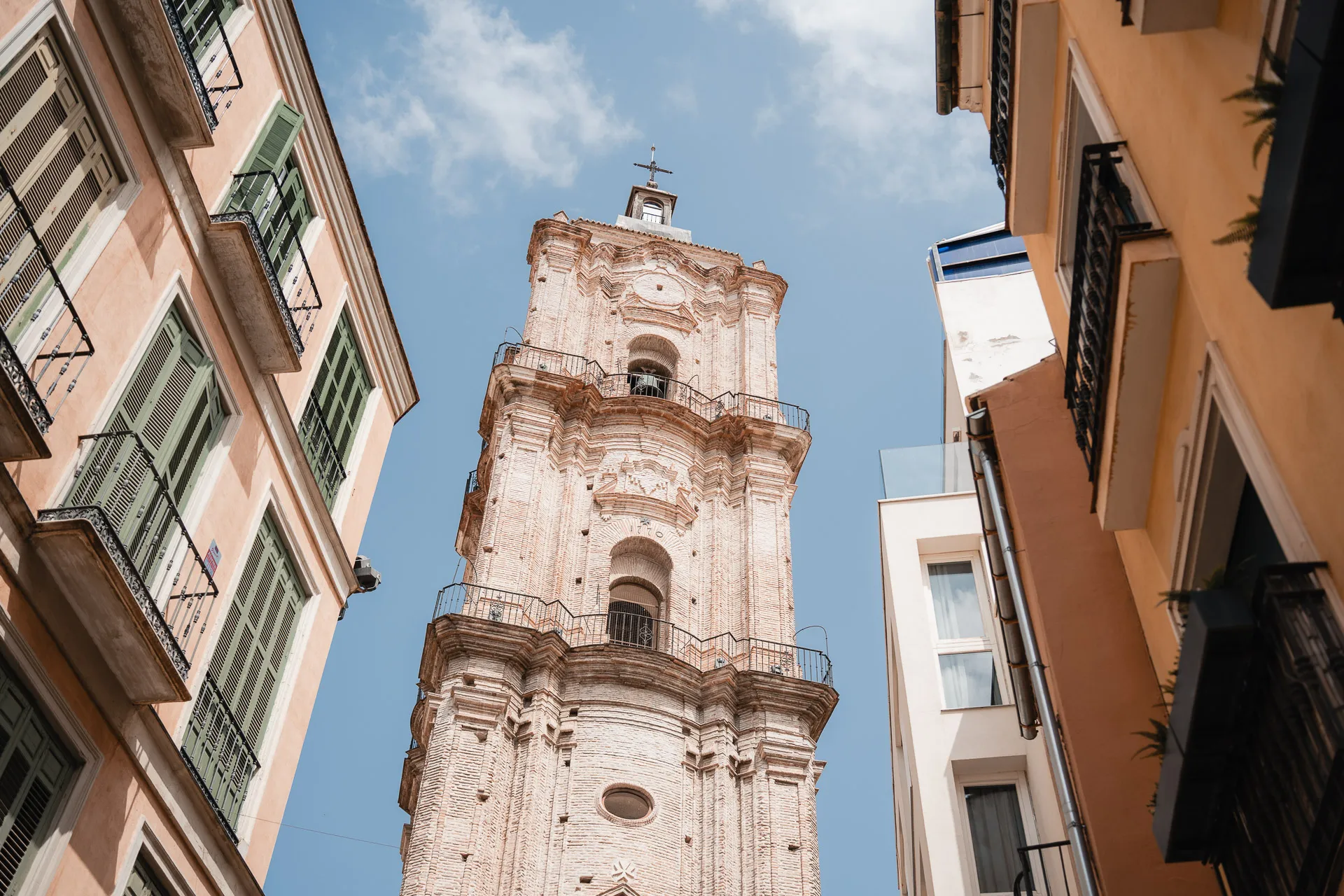
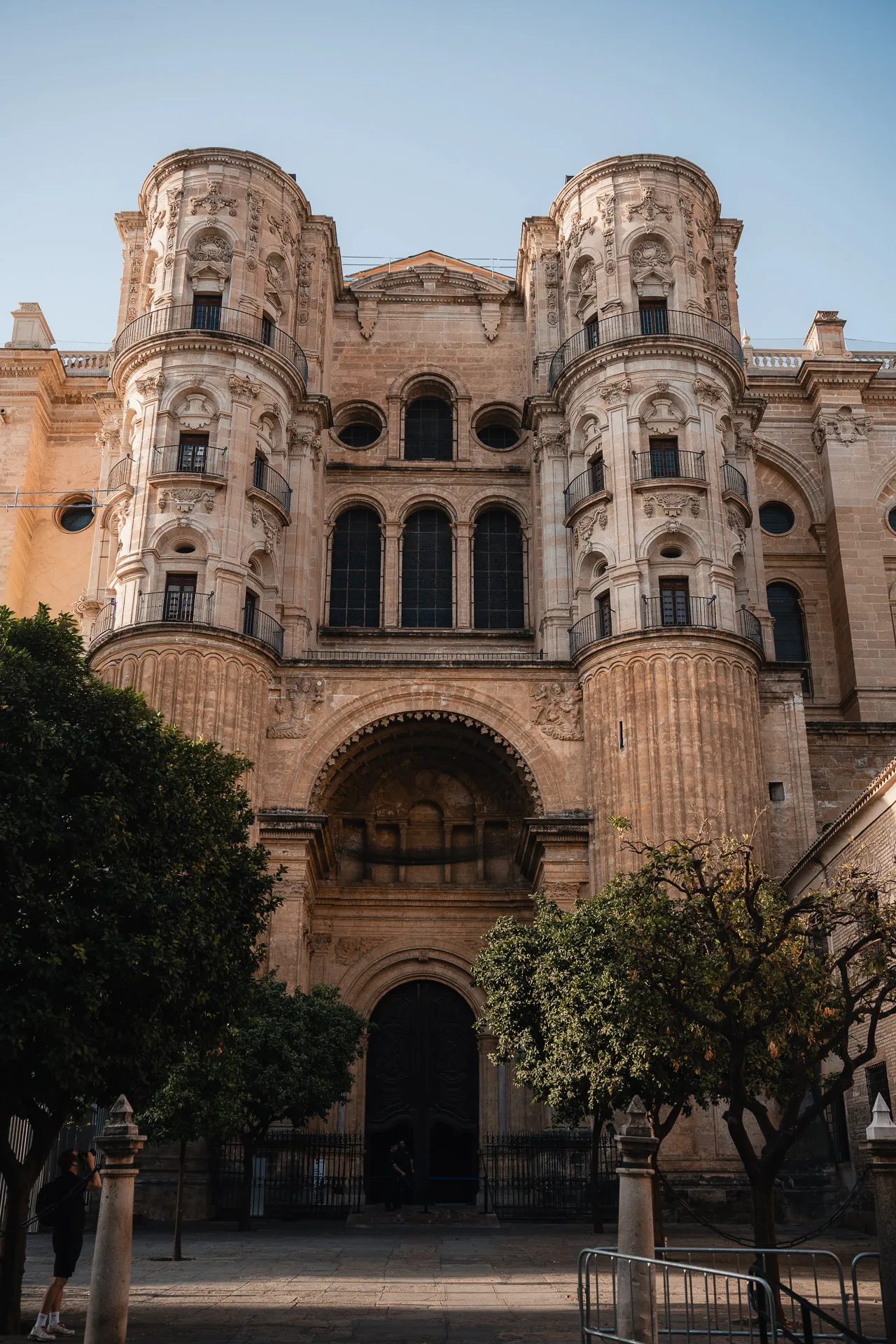
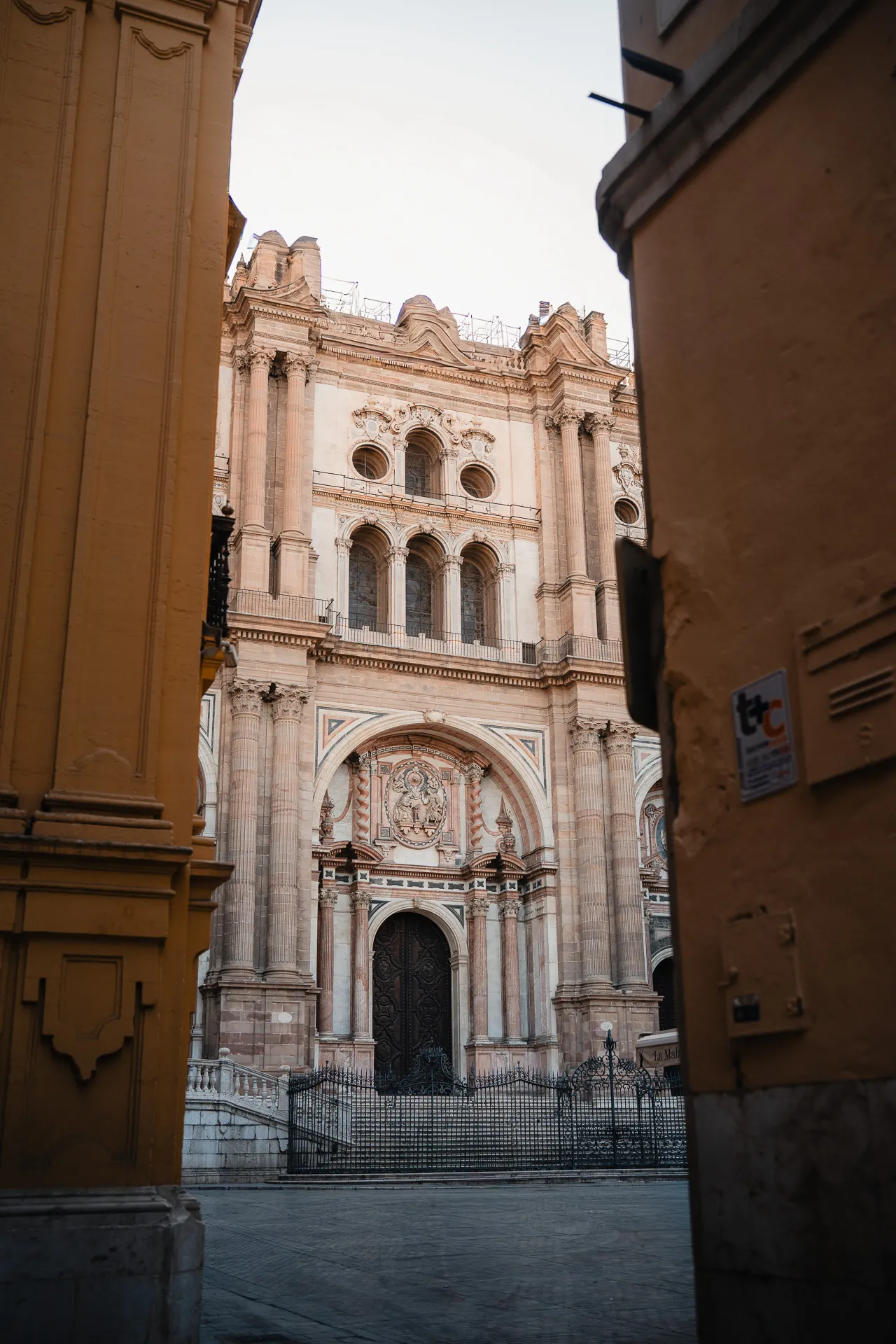
The cathedral is gigantic and often appears unexpectedly among the buildings of the historic center. Especially from the narrow surrounding streets, you get beautiful glimpses of the tower and the façade.
The cathedral is also known as La Manquita, or the one-armed lady, because one of the two planned towers was never fully completed.
I didn’t visit the interior this time, but even just the exterior is impressive. Only when you stand right next to the building do you realize how large it actually is.
Dine at Al Patio de Ángel
A friend had recommended that I eat at Taberna Cofrade Las Merchanas. Unfortunately, the restaurant was closed that day.
Eventually, I ended up at Al Patio de Ángel Cocina Española.
That turned out to be absolutely no bad second choice. The food was fantastic and the atmosphere cozy. It’s a place I would recommend after my visit if you’re looking for Spanish dishes in the historic center.
After dinner, I returned to my hotel. The day had flown by again.
Day three: walking to Castillo de Gibralfaro
On my last morning in Málaga, I wanted to make the most of my time. Therefore, I got up early again to walk to the Castillo de Gibralfaro.
The castle is located higher on the hill than the Alcazaba. The walk from the center is quite steep, especially when it’s warm. Expect about 30 minutes from Calle Alcazabilla.
So, take enough water with you. Along the route, there were vendors offering bottles of water during my visit, but it’s more convenient to be prepared yourself.
I arrived shortly after opening, so it was still relatively quiet. In my opinion, that is the best time to visit Gibralfaro.
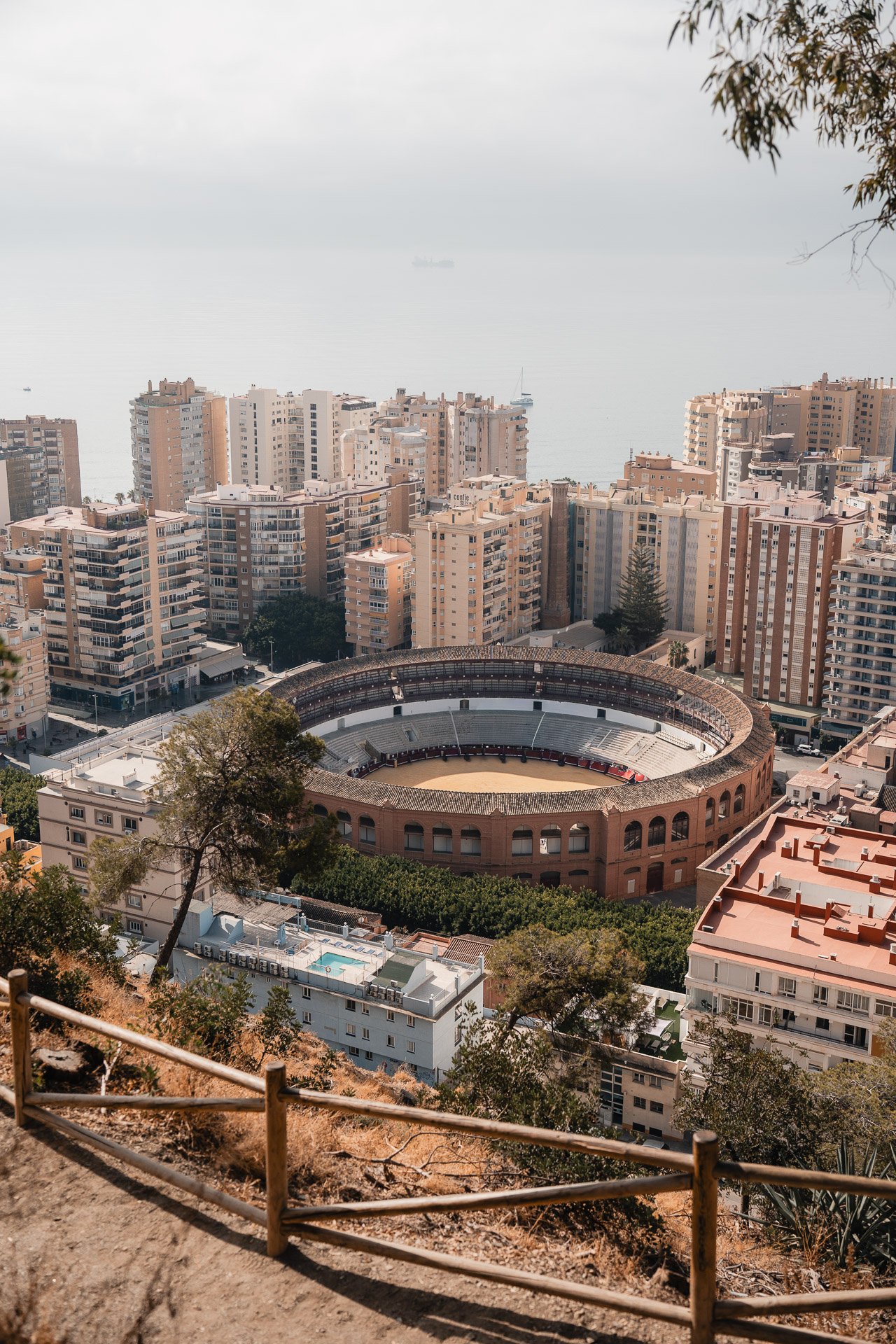
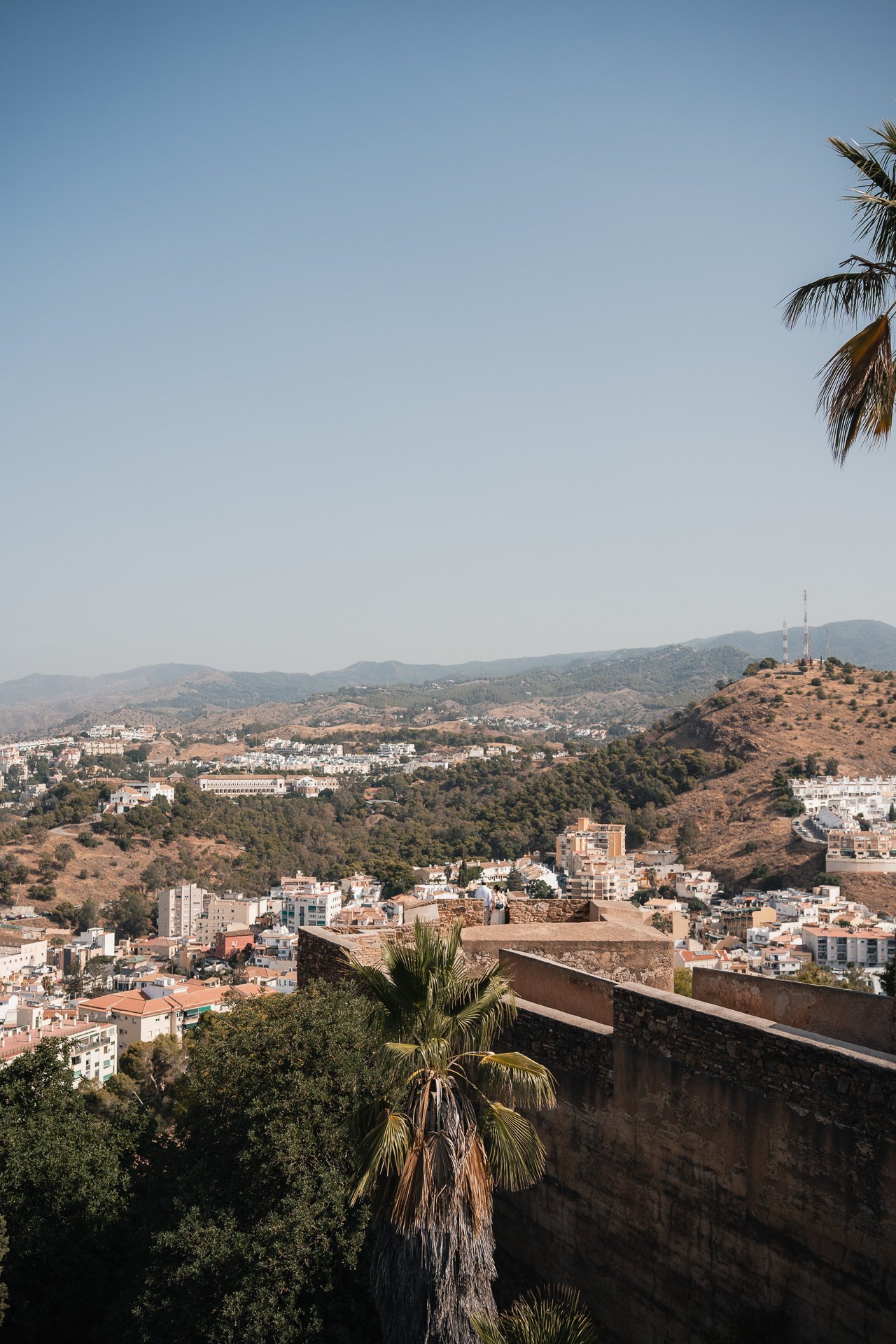
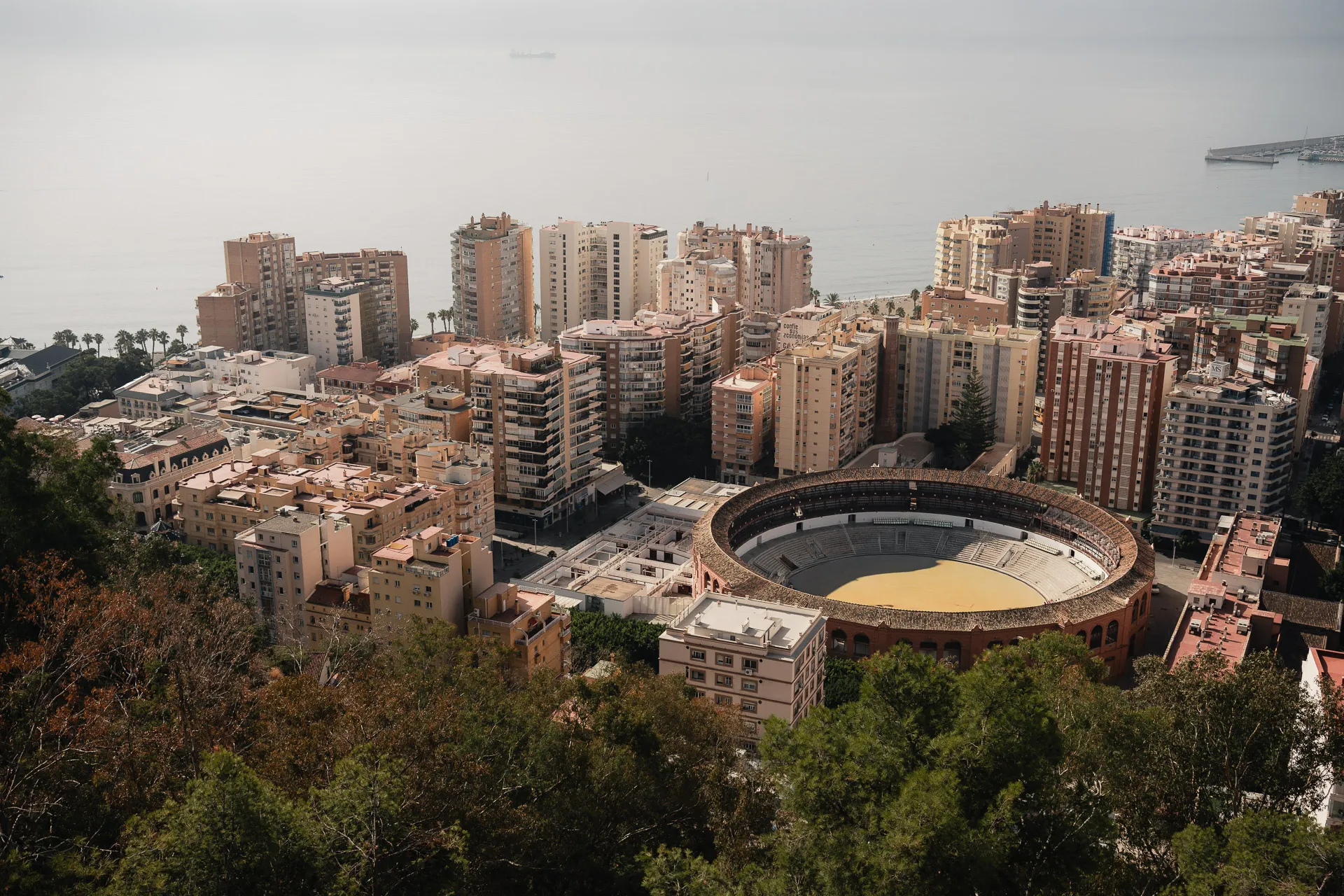
From the walls, you have a beautiful view over Málaga. You look out over the harbor, the city center, Parque de Málaga, and the round bullring.
Just for that view, the climb is worth it.
I had previously purchased a combined ticket for the Alcazaba and Gibralfaro. This allowed me to spread both places over two different days. During my visit, that ticket cost about ten euros.
Tip: Buy a combined ticket; this is cheaper and you can spread your visit to Alcazaba de Málaga and Castillo de Gibralfaro over 2 days.
From Gibralfaro to the harbor of Málaga
After my visit, I walked back down and again through Parque de Málaga.
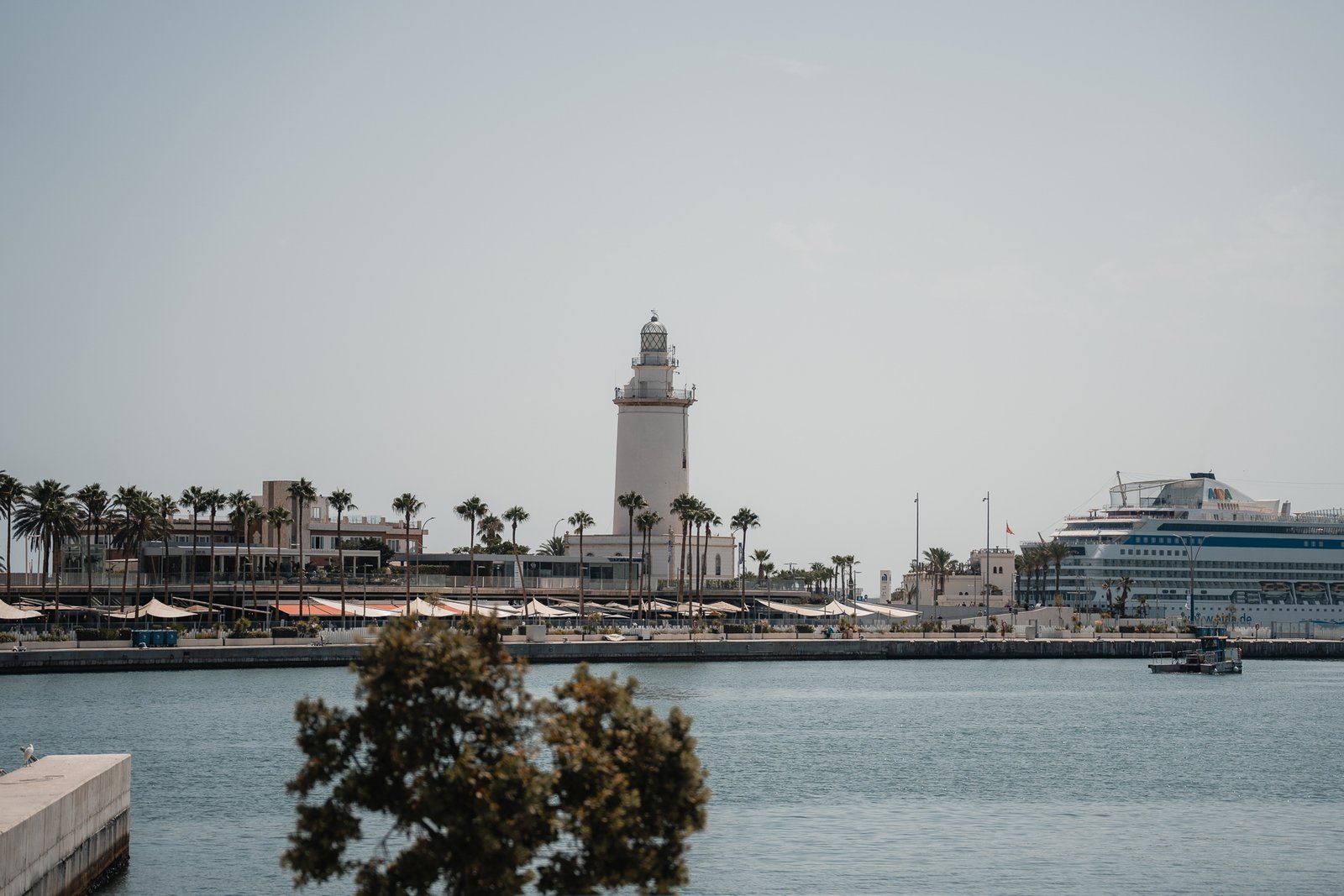
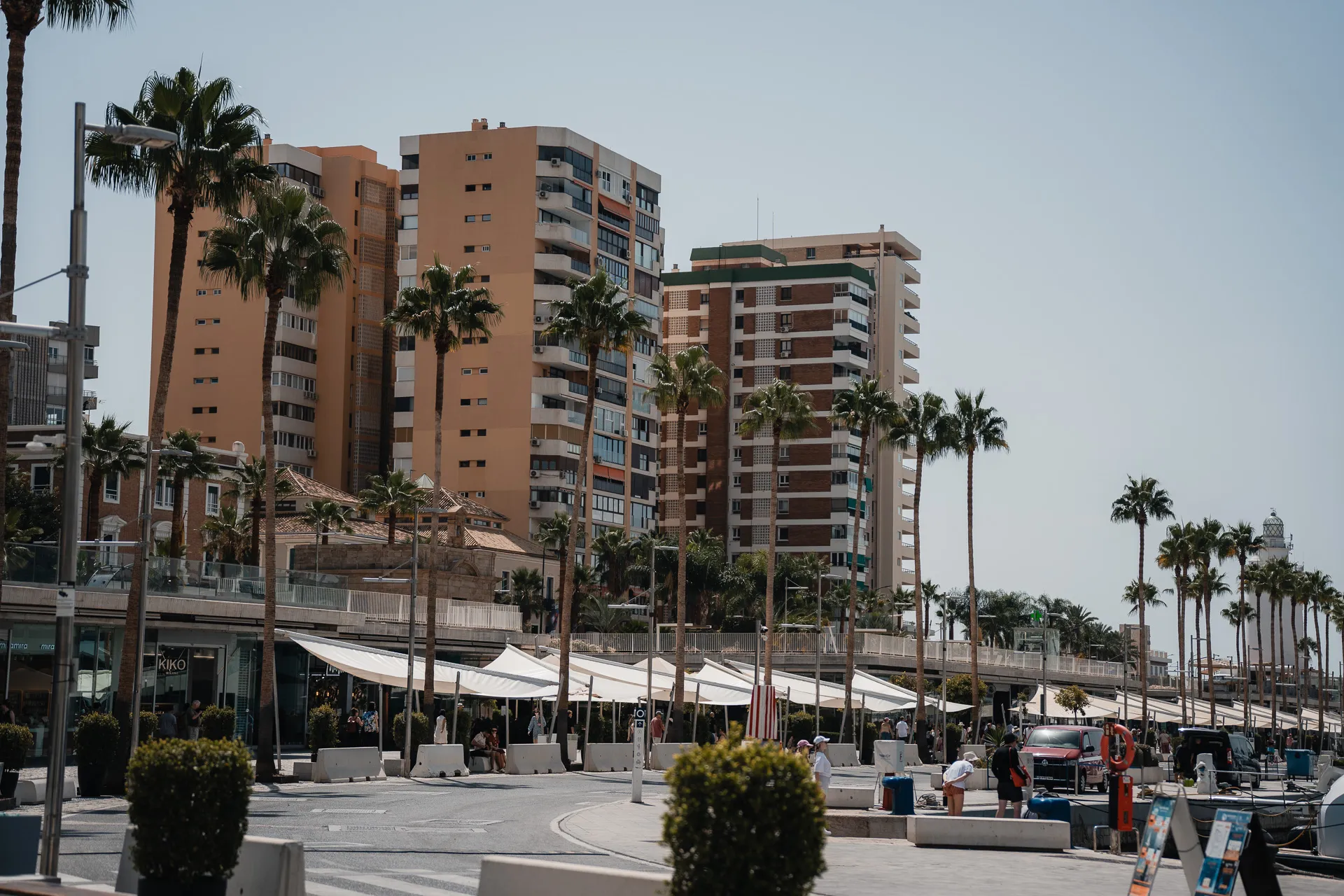
Then I stopped at the harbor, better known as Muelle Uno. This is a modern harbor area with shops, restaurants, and a wide promenade along the water.
The atmosphere is completely different from that of the historic center. You’ll find large yachts, terraces, and regularly cruise ships entering or leaving the harbor.
It’s a pleasant place to walk around leisurely. From here, you can continue towards the beach and make a sort of loop through the city.
Centre Pompidou Málaga
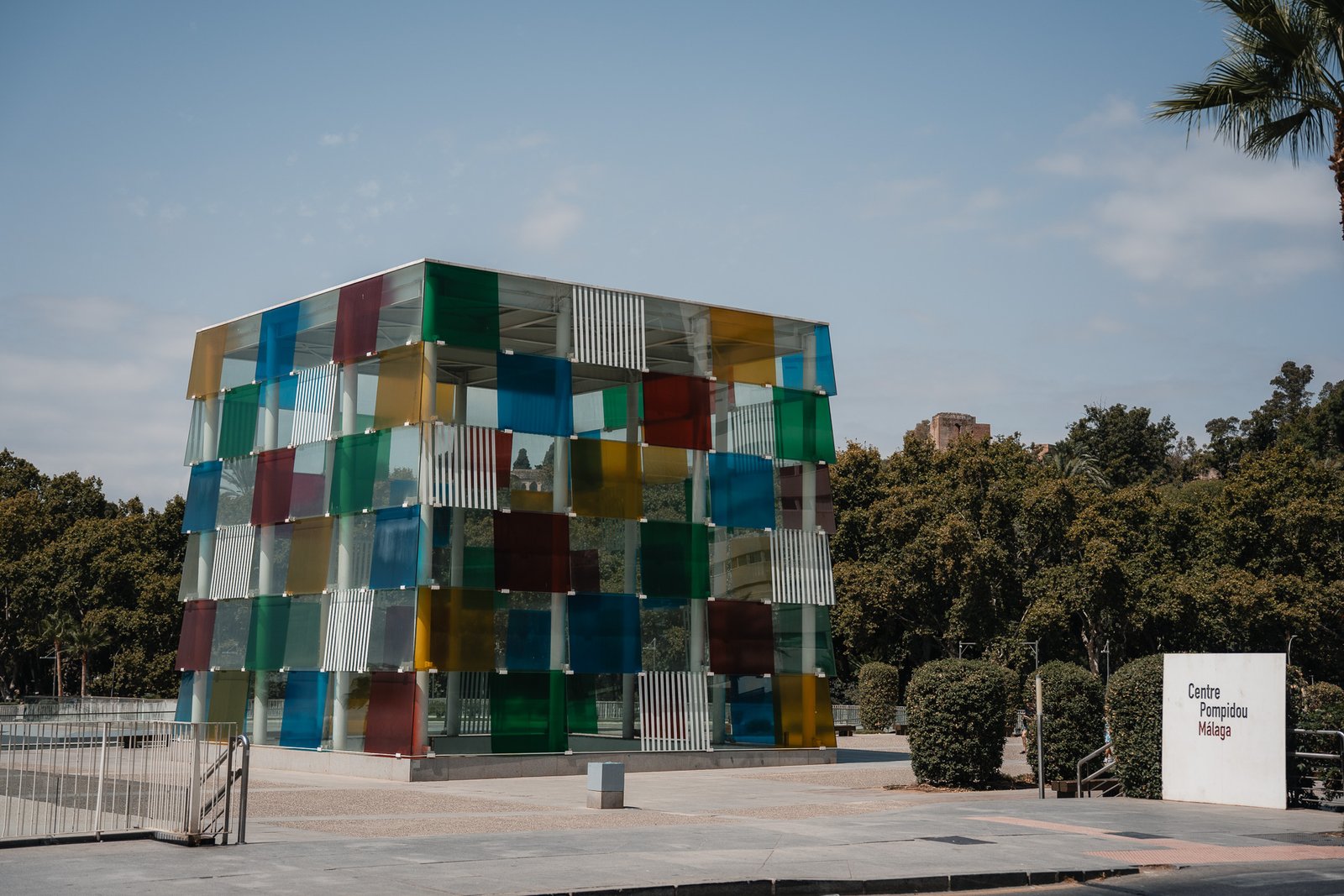
At the harbor, you’ll also find the Centre Pompidou Málaga. The museum immediately stands out because of the large, colorful glass cube above the building.
Even if you don’t visit the museum, the cube is a nice photographic stop.
On my next visit, I would like to combine this with the Picasso Museum and Museo Carmen Thyssen.
Málaga clearly presents itself not only as a beach destination but also as a cultural city. That was something I had somewhat underestimated beforehand.
Discover the street art of Soho
Before I returned to my hotel, I walked through Soho Málaga.
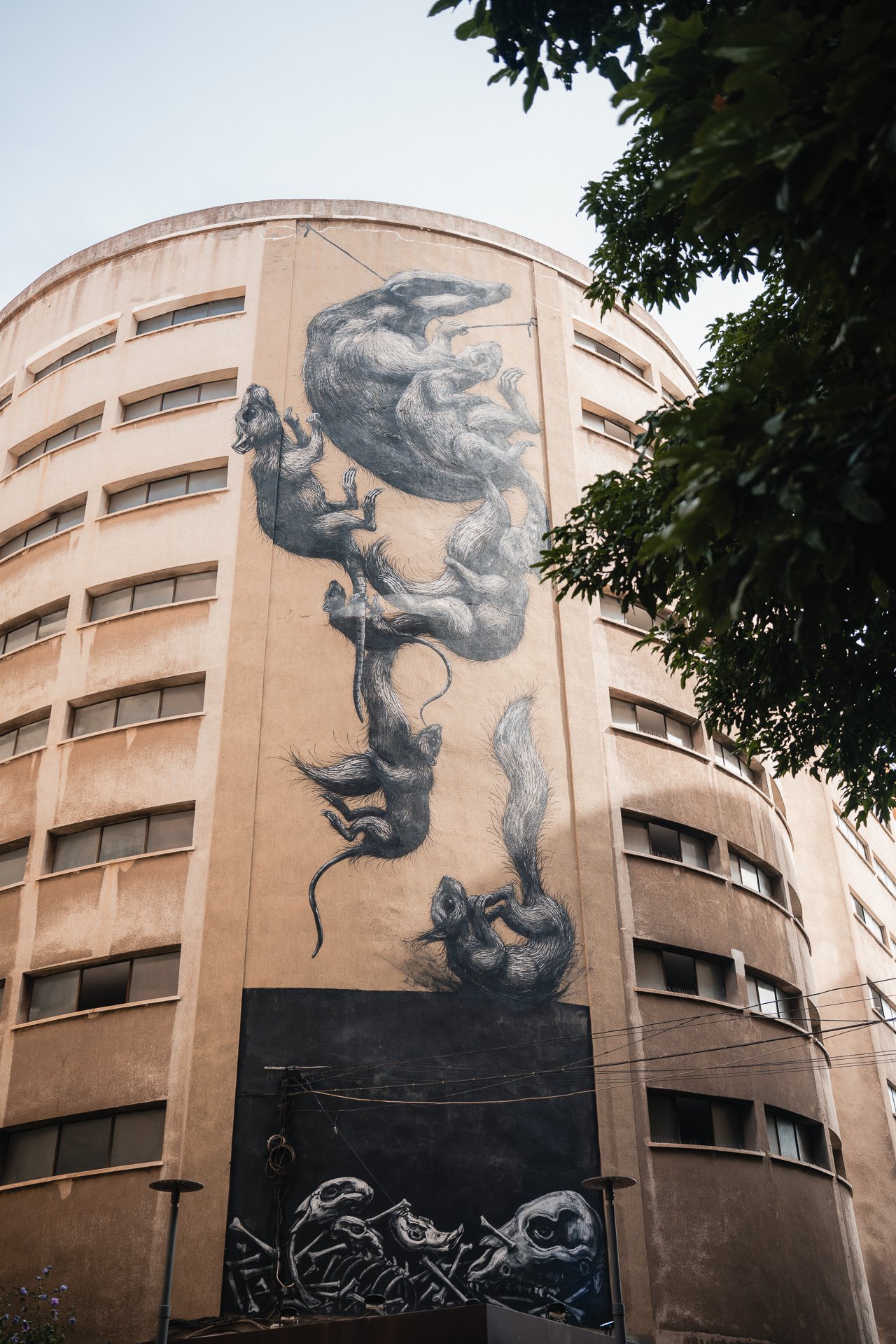
Soho is a more creative and alternative neighborhood between the center and the harbor. You’ll find smaller restaurants, bars, and especially many large murals and graffiti works on the walls.
The atmosphere is a bit rougher and hipper than in the historic center. I found that contrast interesting.
Anyone who loves street art and photography should definitely take a stroll here. Allow about an hour and occasionally leave the main streets behind. The most interesting works are often found in places you wouldn’t immediately walk to.
After that, I returned to Sallés Hotel Málaga Centro, packed my things, and checked out. From Málaga, I drove on to the next stop of my road trip.
Tasting local wine at Antigua Casa de Guardia
After my visit to Soho, I walked to Antigua Casa de Guardia, one of the most characterful places I visited during my stay in Málaga.
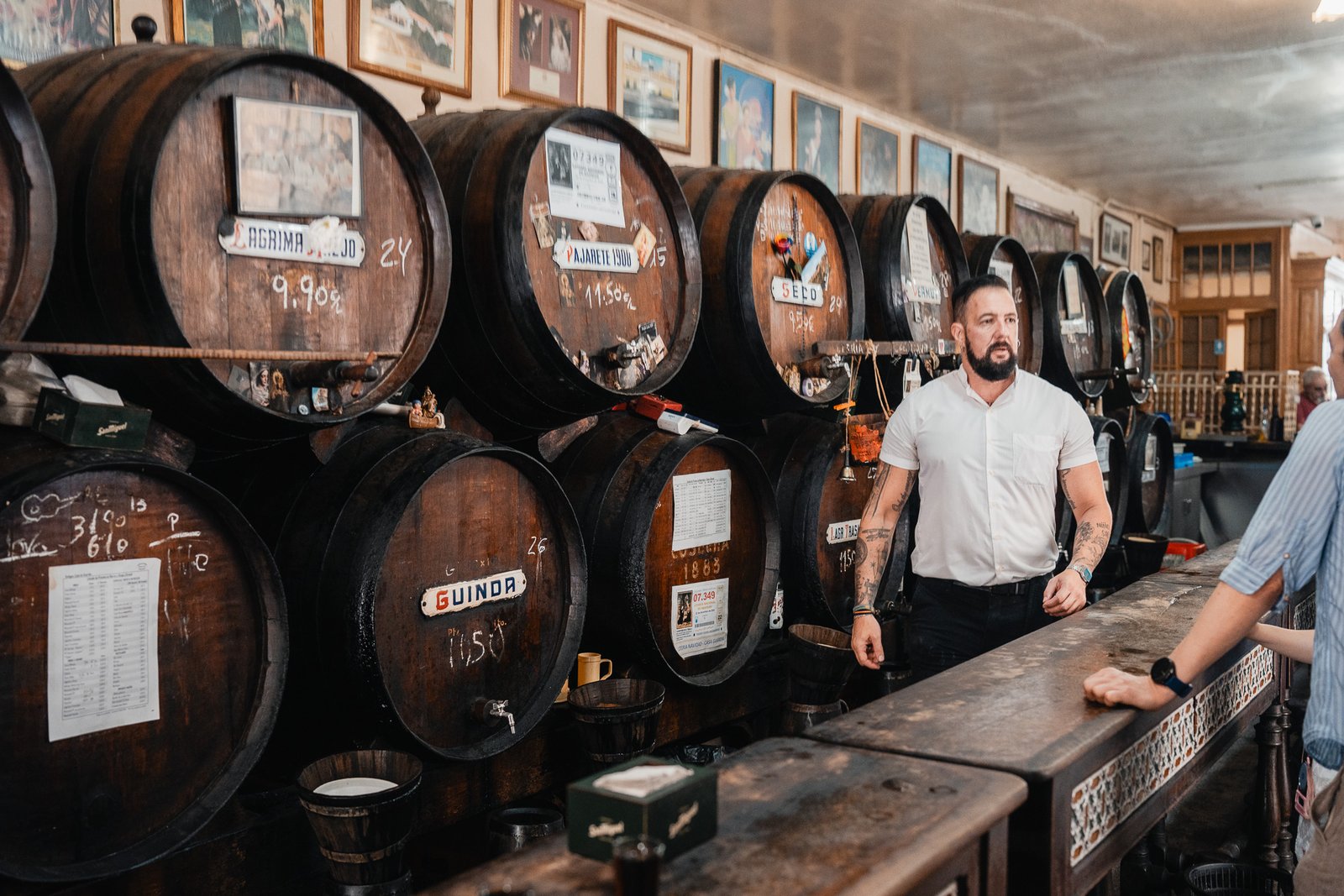
This historic wine bar feels completely different from the modern bars and restaurants in the city. The decor is simple and traditional, with large wooden wine barrels behind the bar from which various local wines are served.
You don't come here for a trendy interior or elaborate cocktails, but for an authentic piece of Málaga. The atmosphere is lively and uncomplicated. Both locals and visitors stand at the long bar to try a glass of local sweet wine, vermouth, or other Málaga wines.
The way your order is tracked also adds to the experience. The bill is simply written in chalk on the bar. No complicated system, but a tradition that perfectly fits the place.
It was a nice last stop before I left Málaga. After the modern street art of Soho, I found myself here in a much more traditional part of the city. It’s that contrast that makes Málaga so interesting.
Afterwards, I returned to my accommodation, packed my things, and checked out. My road trip continued towards the east coast of Spain, but Málaga had already left a strong impression in just two days.

Can you visit Málaga in 48 hours?
Yes, 48 hours is enough to get a good first impression of Málaga.
However, I would personally stay at least three to four days on my next visit. Two days feels quite rushed if you also want to visit some museums or enjoy the beach at a leisurely pace.

Is Málaga worth it?
Málaga pleasantly surprised me.
The city combines Moorish history, modern art, beaches, tapas bars, and a vibrant historic center. At the same time, everything feels compact enough to discover a lot on foot.
My visit was short, and due to the heat, I had to plan my days carefully. Still, I got a nice first impression of the city in 48 hours.
Would I go back? Absolutely.
Just for the museums, the beaches, and the many day trips around Málaga, I have plenty of reasons to come back. Next time, I would stay a bit longer and pace my days more leisurely. Because Málaga is much more than just the place where your plane lands before you start a road trip through Andalusia.
Málaga wordt vaak gezien als de plek waar je landt om daarna zo snel mogelijk naar een van de badplaatsen aan de Costa del Sol te rijden. En eerlijk: lange tijd keek ik er zelf ongeveer hetzelfde naar.
Tot ik er deze keer bewust twee dagen bleef.
Ik vloog naar Málaga voor het begin van een roadtrip langs de Spaanse zuid- en oostkust. Naast het ontdekken van de stad stond er ook een sunsetshoot met Lore en Jorge op de planning. Het bleek een fijne combinatie te zijn van waar ik zelf het gelukkigst van word: rondzwerven met mijn camera, lokale plekken ontdekken, lekker eten en ergens tegen zonsondergang mensen fotograferen op een bijzondere locatie.
Málaga verraste me vooral door de afwisseling. Je wandelt van eeuwenoude Moorse vestingen naar moderne streetart, drinkt lokale wijn in een bar die er bijna hetzelfde uitziet als honderd jaar geleden en staat even later met je voeten in de Middellandse Zee.
Heb je twee of drie dagen in Málaga? Dan zijn dit mijn favoriete plekken, tips en bezienswaardigheden.
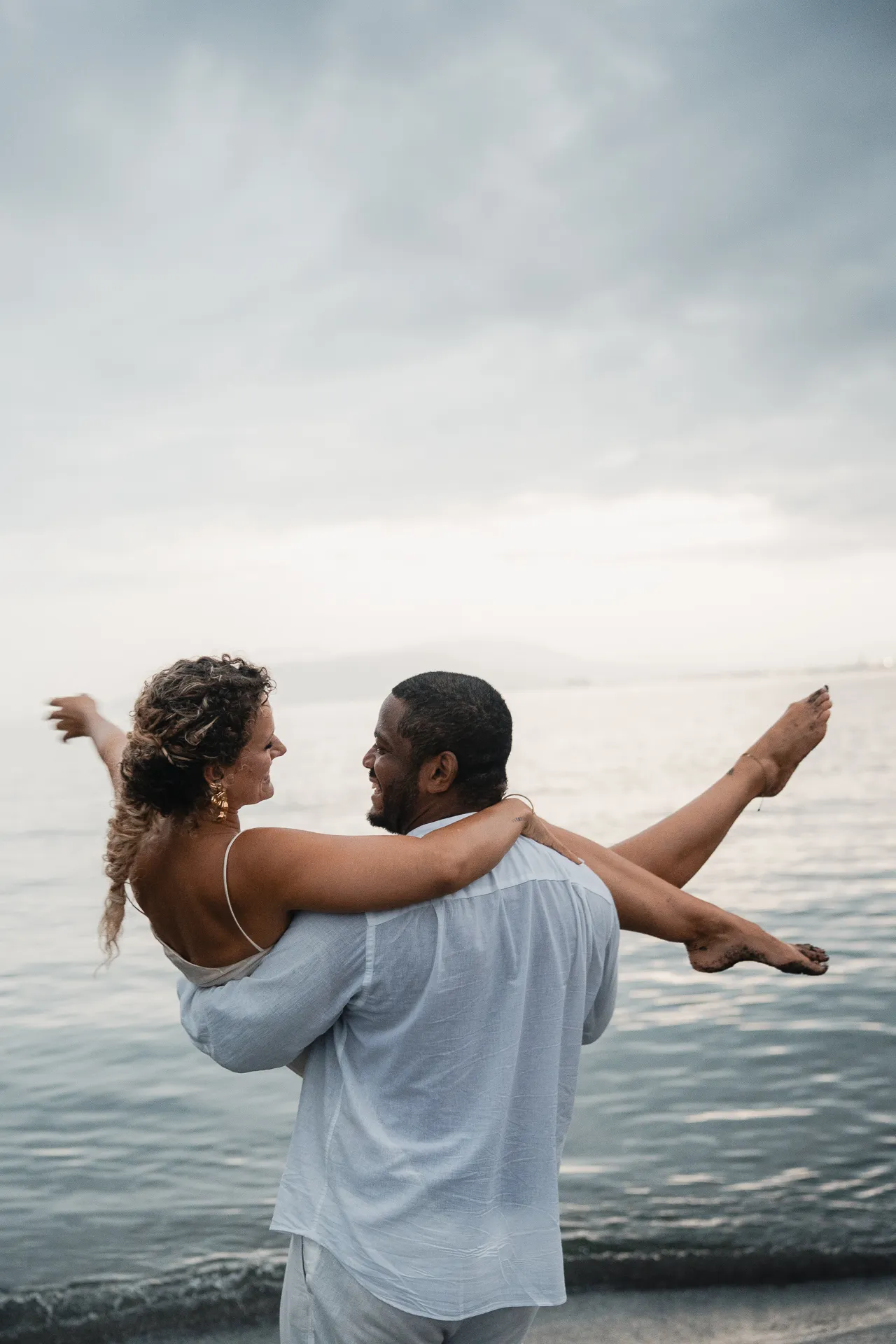
Bekijk hier de romantische koppelshoot van Lore & Jorge op het strand
Hoe reis je naar Málaga?
De makkelijkste manier om Málaga vanuit België of Nederland te bereiken is met het vliegtuig. Málaga Airport ligt vlak buiten de stad en wordt vanuit verschillende Europese steden rechtstreeks aangevlogen.
Zelf vloog ik vroeg in de ochtend vanuit Brussel naar Málaga. Enkele uren later stond ik onder de Spaanse zon en kon mijn roadtrip beginnen.
Het handige aan Málaga is dat de luchthaven erg dicht bij het centrum ligt. Je hoeft dus niet automatisch een huurauto te nemen wanneer je enkel een stedentrip naar Málaga plant.
Van Málaga Airport naar het centrum
Een van de makkelijkste opties is de C1-trein, die de luchthaven rechtstreeks verbindt met Málaga Centro-Alameda. De rit duurt maar ongeveer twaalf minuten.
Daarnaast rijdt er een airportbus tussen de luchthaven en het centrum en natuurlijk kun je ook een taxi, Uber of Bolt nemen.
Blijf je vooral in Málaga zelf? Dan zou ik persoonlijk geen auto huren. Het historische centrum is compact en bijna alles wat je tijdens een eerste bezoek wilt zien, ligt op wandelafstand.
Ga je Málaga combineren met een roadtrip door Andalusië? Dan verandert het verhaal helemaal.
Een auto huren in Málaga: wel of niet doen?
Ik haalde na aankomst meteen mijn huurauto op omdat Málaga voor mij maar het begin was van een langere roadtrip richting de oostkust van Spanje.
Wil je plekken als Frigiliana, Caminito del Rey, Ronda of Setenil de las Bodegas bezoeken, dan geeft een huurauto je enorm veel vrijheid.
Voor Málaga zelf had ik hem amper nodig.
Het centrum is niet gemaakt om voortdurend met de auto rond te rijden en parkeren kan er lastiger en duurder zijn dan gewoon je wagen achter te laten en te voet verder te gaan.
Mijn advies is daarom eenvoudig:
Stedentrip Málaga? Geen auto nodig.
Roadtrip door Andalusië? Absoluut een auto huren.
Hoe verplaats je jezelf in Málaga?
Het antwoord is voor het grootste deel: te voet.
Málaga is een heerlijke stad om gewoon doorheen te wandelen. Het historische centrum, de kathedraal, Mercado de Atarazanas, Alcazaba, Soho, Parque de Málaga en Muelle Uno liggen allemaal relatief dicht bij elkaar.
Bovendien zou je veel missen wanneer je telkens van punt A naar punt B rijdt.
De kleine straatjes, onverwachte pleintjes en oude gevels tussen de grote bezienswaardigheden waren voor mij minstens zo interessant als de bekende plekken zelf.
Voor langere afstanden beschikt Málaga ook over stadsbussen en een metro. Taxi, Uber en Bolt zijn handig wanneer je bijvoorbeeld naar een locatie buiten het centrum wilt.
Voor mijn fotoshoot aan Playa del Peñón del Cuervo, enkele kilometers buiten het historische centrum, gebruikte ik wel de auto.
Hoeveel dagen heb je nodig voor Málaga?
Ik had ongeveer 48 uur in Málaga en kon daarmee verrassend veel zien.
Twee dagen zijn voldoende wanneer je vooral het historische centrum wilt ontdekken, de belangrijkste bezienswaardigheden wilt bezoeken en een eerste indruk van de stad wilt krijgen.
Toch zou ik achteraf liever drie dagen hebben gehad.
Met drie dagen hoef je minder te haasten, heb je tijd om ook een museum te bezoeken en kun je bijvoorbeeld een halve dag aan het strand doorbrengen.
Wil je daarnaast nog uitstappen maken naar de omgeving? Reken dan eerder vier tot vijf dagen of maak van Málaga het beginpunt van een roadtrip door Andalusië.
Bezoek Mercado Central de Atarazanas
Een van mijn eerste stops in Málaga was de Mercado Central de Atarazanas en dat is meteen een plek die ik zou aanraden om aan het begin van je bezoek te plannen.
Niet omdat het het grootste monument van de stad is, maar omdat je hier meteen een stukje van het lokale leven meekrijgt.
Binnen vind je kraampjes vol groenten, fruit, olijven, vleeswaren en vooral heel veel verse vis en zeevruchten. Tussen de marktkramen zitten kleine bars waar mensen iets eten of een glas drinken.
Ik heb sowieso iets met lokale markten wanneer ik reis. Je krijgt er vaak sneller een gevoel bij een bestemming dan wanneer je alleen de bekendste monumenten afloopt.
Kijk trouwens ook even naar de bijzondere toegangspoort en het kleurrijke glas-in-loodraam achteraan in de markthal.
Verdwaal door het historische centrum van Málaga
Je hoeft in Málaga niet voortdurend een bestemming in Google Maps in te geven.
Sterker nog: leg je telefoon af en toe gewoon weg.
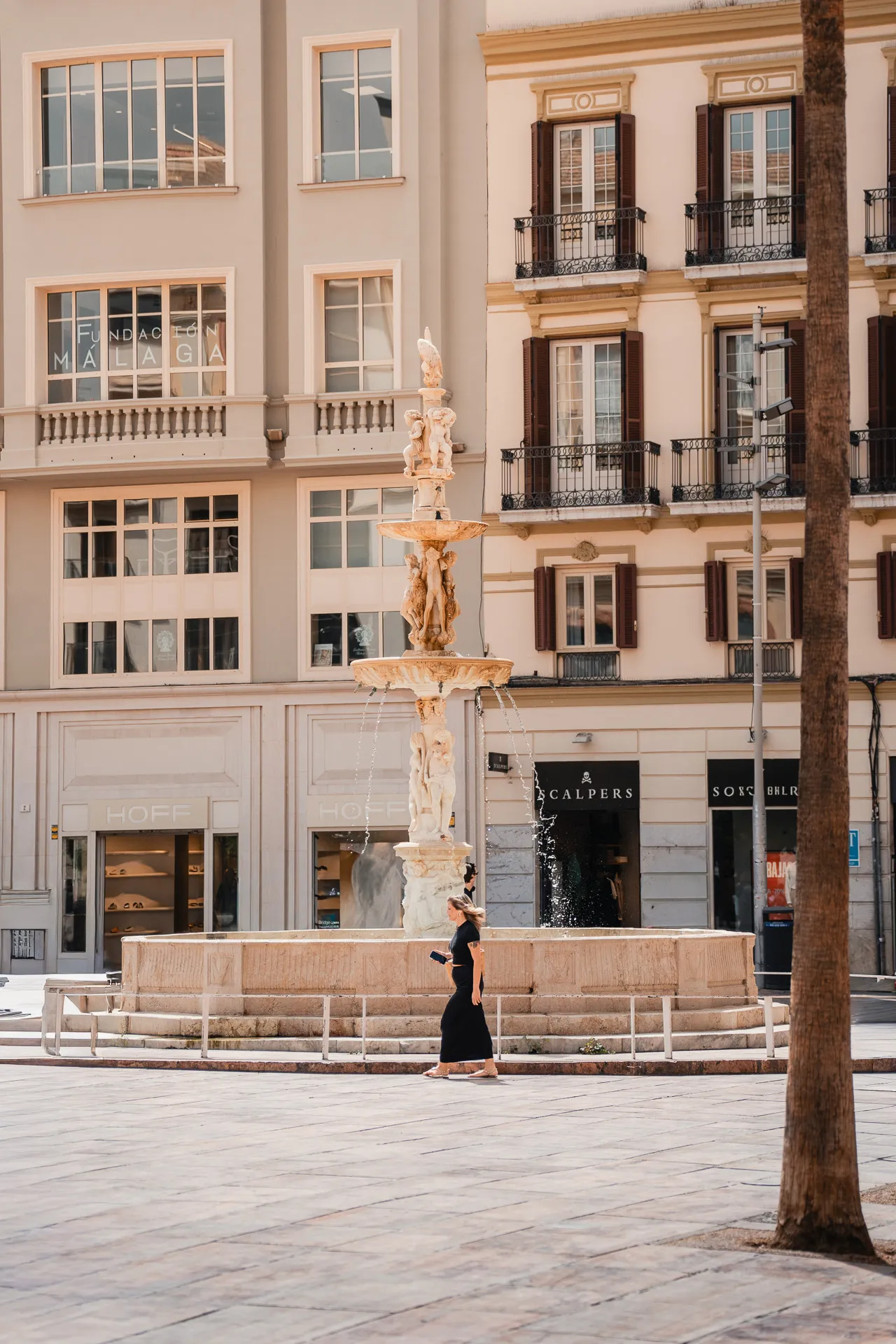
Rond Calle Marqués de Larios en Plaza de la Constitución ligt een wirwar van autovrije straten, pleinen, kerken, tapasbars en oude gevels.
Calle Larios zelf is de bekendste winkelstraat van Málaga en daardoor niet noodzakelijk mijn favoriete straat, maar ze vormt wel een goed startpunt om het historische centrum te ontdekken.
Mijn favoriete momenten waren meestal net wanneer ik de grotere straten verliet.
Een verweerde gevel, een klein balkon vol planten, iemand die zijn café opent of plots mooi licht dat door een smalle straat valt.
Vooral vroeg in de ochtend is het centrum prachtig.
Plaza de la Constitución en het Museo Carmen Thyssen
Aan Plaza de la Constitución vind je onder andere het Museo Carmen Thyssen Málaga. De collectie bestaat vooral uit Spaanse en Andalusische kunst uit de negentiende eeuw.
Ik ben zelf niet naar binnen gegaan omdat ik maar twee dagen in Málaga had en vooral zoveel mogelijk van de stad wilde zien. Toch staat het museum hoog op mijn lijst voor een volgend bezoek.
Málaga heeft verrassend veel musea. Naast het Carmen Thyssen Museum vind je er onder andere het Picasso Museum, het Centre Pompidou Málaga en het Museo de Málaga.
Wie vooral voor kunst en cultuur komt, kan gemakkelijk een volledige dag alleen met musea vullen.
Ga vroeg op pad met je camera
Wie mijn reisverhalen al langer volgt, weet waarschijnlijk dat ik steden het liefst fotografeer wanneer de rest nog aan het ontbijten is.
Málaga is daarop geen uitzondering.
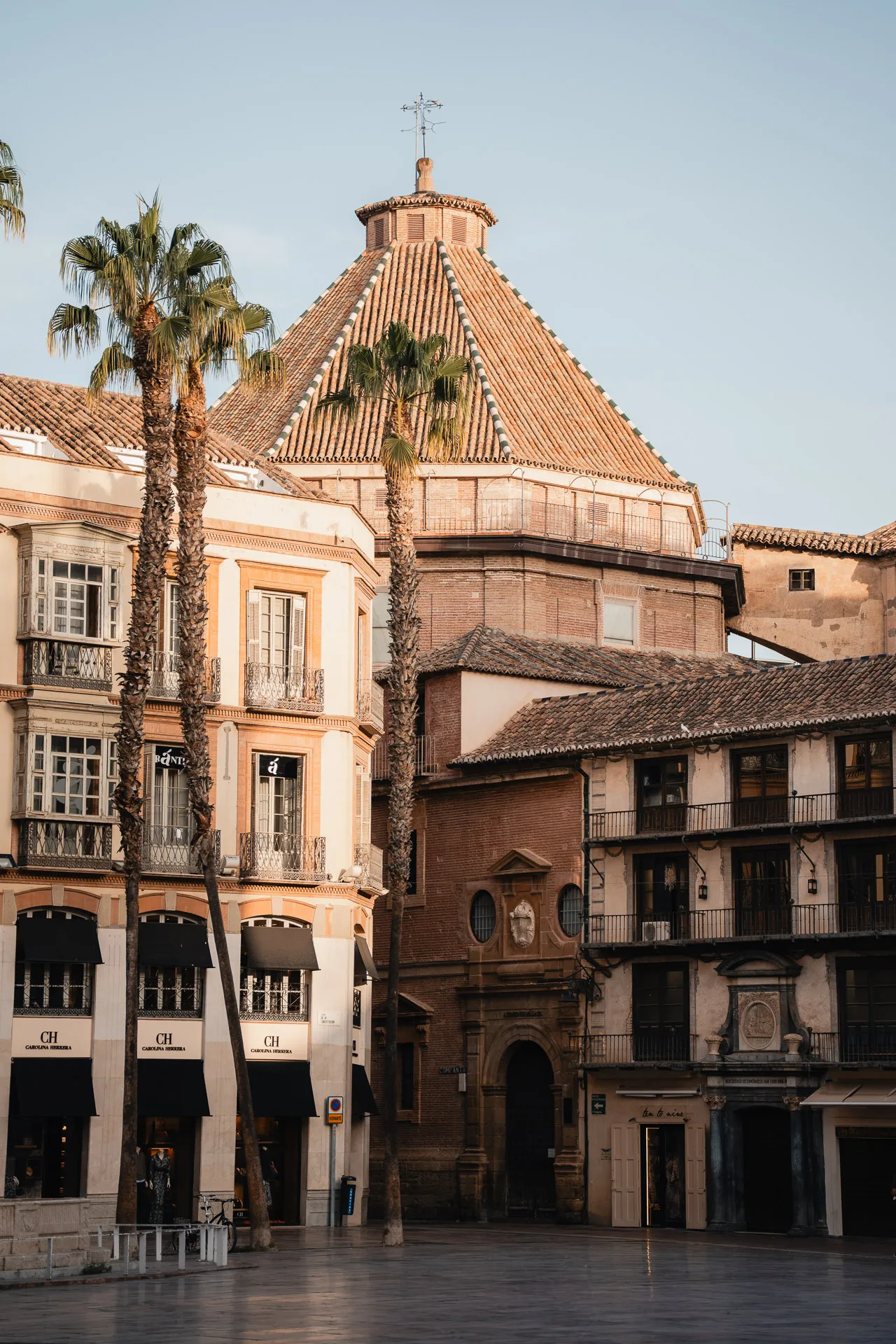
Overdag lopen de belangrijkste straten behoorlijk vol, maar vroeg in de ochtend krijg je een heel andere stad te zien.
De straten zijn grotendeels leeg, winkels beginnen langzaam te openen en de lage zon valt mooi tussen de gebouwen door.
Voor fotografie vond ik dit zonder twijfel het fijnste moment van de dag.
En ja, daarvoor moet je soms iets te vroeg uit bed. Mijn enthousiasme daarover is op het moment dat de wekker afgaat doorgaans iets kleiner dan wanneer ik twintig minuten later met mijn camera door een lege stad wandel.

Stap binnen bij Iglesia de los Santos Mártires Ciriaco y Paula
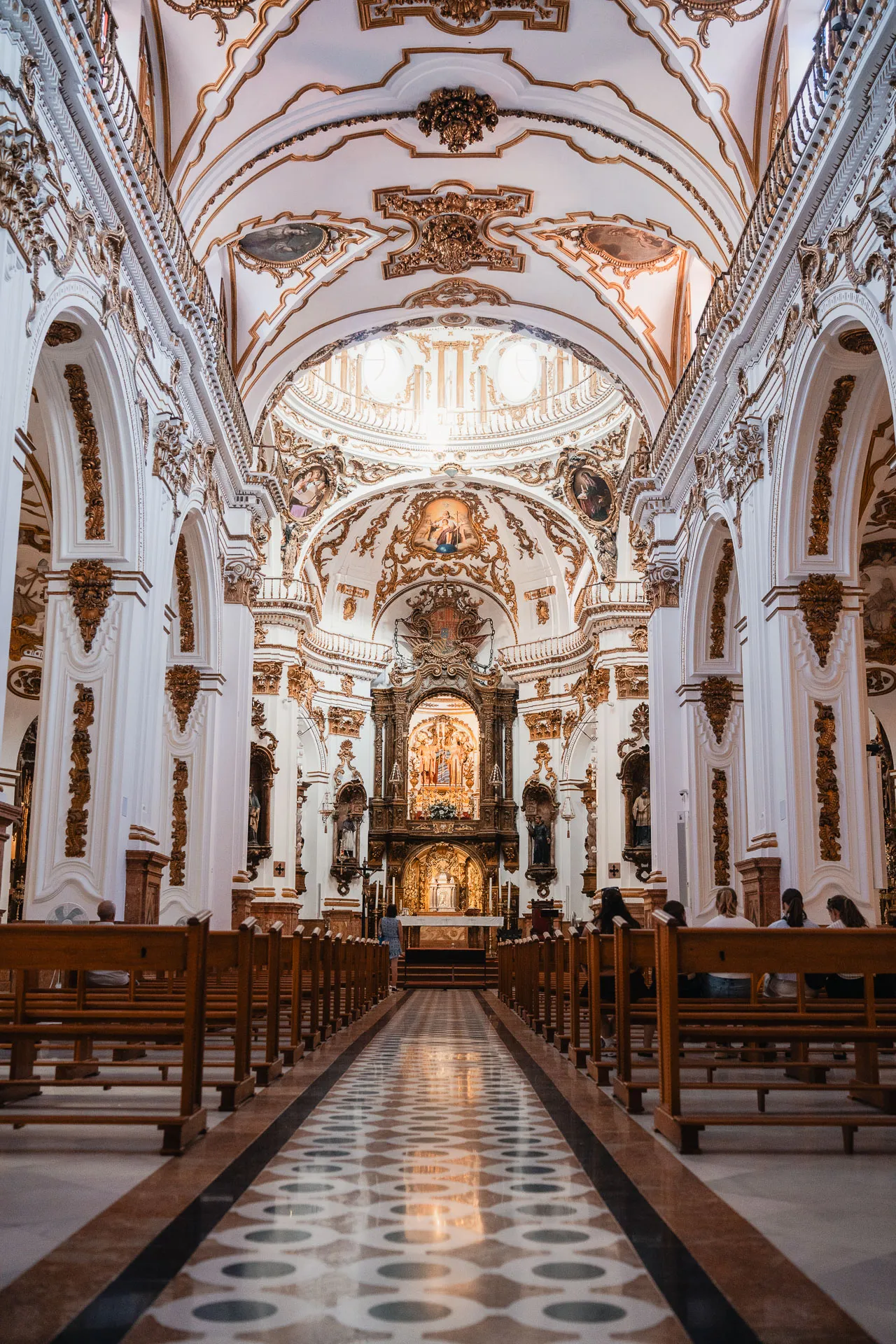
Een van de verrassingen tijdens mijn wandeling door Málaga was de Iglesia de los Santos Mártires Ciriaco y Paula.
Van buitenaf zou je er misschien voorbijlopen zonder te beseffen hoe bijzonder deze kerk vanbinnen is.
Doe dat dus vooral niet.
Het interieur is rijkelijk versierd en veel indrukwekkender dan ik op voorhand had verwacht. Gouden details, religieuze kunst, beelden en een enorme hoeveelheid ornamenten vullen bijna iedere hoek van de kerk.
Het was een van die onverwachte plekken die uiteindelijk meer indruk maken dan iets wat vooraf groot op je planning stond.
De kerk ligt midden in het historische centrum, dus je hoeft er ook nauwelijks voor om te lopen.
Bezoek de Alcazaba van Málaga
De Alcazaba van Málaga is een van de bekendste bezienswaardigheden van de stad en wat mij betreft ook eentje die je absoluut niet moet overslaan.
Het Moorse fort ligt tegen de heuvel boven het historische centrum en werd oorspronkelijk gebouwd als verdedigingswerk. Vandaag wandel je er door een wirwar van oude muren, poorten, patio’s, kleine tuinen en binnenplaatsen die nog altijd duidelijk de Moorse invloed in Andalusië laten zien.
Wat ik hier vooral mooi vond, waren niet alleen de grotere gebouwen, maar net de kleinere details. Oude stenen bogen, betegelde muren, waterpartijen en telkens opnieuw onverwachte doorkijkjes over Málaga en de haven.
De Alcazaba is ook een fijne plek om even aan de drukte van het centrum te ontsnappen. Zodra je wat hoger klimt, wordt het rustiger en krijg je steeds betere uitzichten over de stad.
Ik bezocht de Alcazaba in de namiddag. In september was het toen nog behoorlijk warm, dus wanneer je in de zomer of vroege herfst reist, zou ik aanraden om je bezoek eerder in de ochtend of later op de dag te plannen.
Je kunt de Alcazaba combineren met het hoger gelegen Castillo de Gibralfaro. Zelf splitste ik beide bezoeken bewust op: de Alcazaba op dag twee en Gibralfaro de volgende ochtend. Dat vond ik uiteindelijk veel aangenamer dan beide op hetzelfde hete moment af te werken.
Tip: Koop je een combiticket, dan kun je beide monumenten bezoeken, ook op verschillende dagen.
Bekijk de Catedral de Málaga
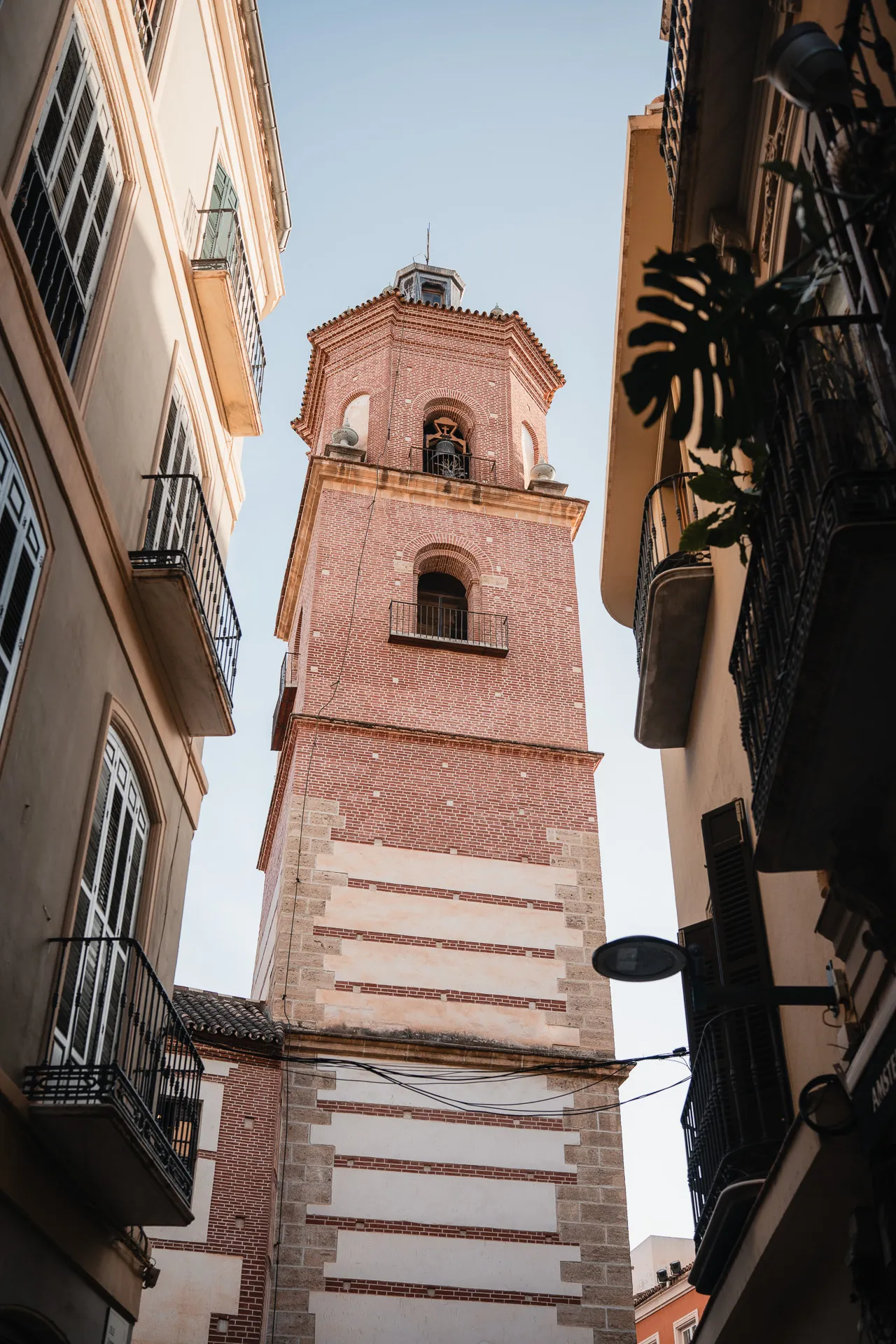
Midden tussen de smalle straten van de oude stad staat plots de gigantische Catedral de la Encarnación de Málaga.
Je merkt pas echt hoe groot ze is wanneer je vanuit een van de omliggende straten richting de kathedraal wandelt.
De kathedraal wordt ook wel La Manquita, oftewel de eenarmige dame, genoemd omdat één van de geplande torens nooit volledig werd afgewerkt.
Zelf vond ik vooral de omgeving rond de kathedraal leuk om te fotograferen. Vanuit verschillende straten krijg je telkens een ander perspectief op het gebouw.
Wandel door Parque de Málaga
Tussen het historische centrum en de haven ligt Parque de Málaga.
Het is misschien niet de reden waarom je speciaal naar Málaga reist, maar je komt er tijdens het verkennen van de stad bijna vanzelf doorheen.
En bij temperaturen boven de dertig graden zijn de palmbomen en schaduw plots verrassend aantrekkelijk.
Het park vormt bovendien een mooie wandelroute wanneer je van de Alcazaba richting Muelle Uno en de haven gaat.
Verken Castillo de Gibralfaro en geniet van het uitzicht
Boven de Alcazaba ligt het Castillo de Gibralfaro.
Je kunt beide bezienswaardigheden combineren, maar ik besloot ze bewust over twee verschillende momenten te verdelen.
De volgende ochtend wandelde ik naar boven. En laat ik het zo zeggen: op een warme dag merk je tijdens die klim vrij snel dat Málaga tegen een heuvel gebouwd is.
Eenmaal boven maakt het uitzicht veel goed. Vanaf de muren van Gibralfaro kijk je over bijna heel Málaga. De haven, de kustlijn, het centrum en vooral de ronde arena van La Malagueta liggen beneden je.
Voor fotografen is dit zonder twijfel een van de betere uitzichtpunten over Málaga. Neem water mee. Je toekomstige zweterige zelf zal je dankbaar zijn.
Wandel langs Muelle Uno en de haven
Beneden aan Gibralfaro kun je via Parque de Málaga richting Muelle Uno wandelen.
Hier krijg je plots een heel ander Málaga.
Geen smalle historische straatjes meer, maar een moderne promenade met palmbomen, terrassen, winkels, restaurants en boten in de haven.
Ook het kleurrijke Centre Pompidou Málaga ligt hier.
Je kunt vanaf Muelle Uno verder wandelen naar Playa de la Malagueta of opnieuw richting het historische centrum.

Ontdek de streetart van Soho Málaga
Een wijk die qua sfeer opnieuw helemaal anders is, is Soho Málaga.
Soho ligt tussen de haven en het historische centrum en staat vooral bekend om zijn grote murals en streetart.
Sommige volledige gevels zijn hier veranderd in gigantische kunstwerken.
Je bent er vrij snel doorheen, dus ik zou er geen halve dag voor reserveren, maar wanneer je geïnteresseerd bent in fotografie, kunst of gewoon een andere kant van Málaga wilt zien, is het zeker een leuke omweg.
Voor mij paste Soho vooral goed bij de stad omdat het opnieuw liet zien hoeveel verschillende gezichten Málaga heeft.
Van Moorse architectuur naar barokke kerken en amper een paar straten verder enorme moderne murals.

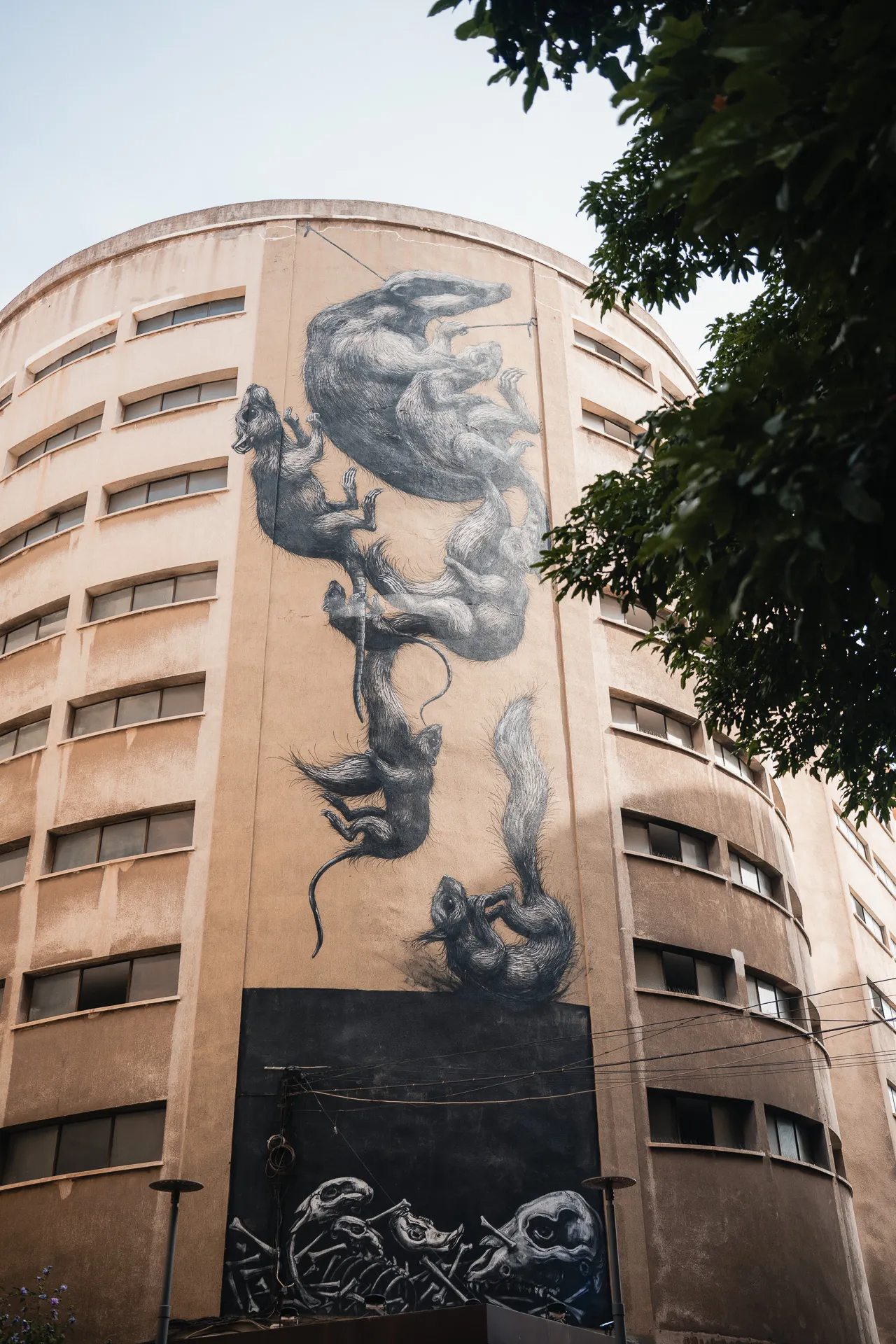
Drink lokale wijn bij Antigua Casa de Guardia
Na mijn wandeling door Soho maakte ik nog een stop bij Antigua Casa de Guardia.
En deze mag wat mij betreft absoluut op je lijstje.
Antigua Casa de Guardia is zo'n plek waar je binnenstapt en onmiddellijk het gevoel krijgt dat er al generaties lang weinig veranderd is.
Achter de lange bar staan grote houten wijnvaten met verschillende lokale Málaga-wijnen. Je kiest wat je wilt proberen, krijgt een glas ingeschonken en je rekening wordt simpelweg met krijt op de bar geschreven.
Geen hippe cocktailkaart, geen interieur dat ontworpen lijkt voor Instagram.
Gewoon wijn, houten vaten en een hoop karakter.
Málaga staat onder andere bekend om zijn zoetere wijnen en dit is een leuke plek om ze eens te proberen.
Ik hou sowieso van dit soort adressen. Niet per se omdat ze perfect of luxueus zijn, maar omdat ze iets vertellen over de plek waar je bent.

Een van mijn favoriete fotolocaties in Málaga: Playa del Peñón del Cuervo
Mijn mooiste avond in Málaga speelde zich eigenlijk niet in het centrum af.
Ik had afgesproken met Lore en Jorge voor een koppelfotoshoot bij Playa del Peñón del Cuervo, aan de oostkant van Málaga.
En dit is precies het soort locatie waar mijn liefde voor reizen en fotografie samenkomt. In plaats van een klassiek stadsstrand vind je hier een ruiger stukje kust met rotsen, open zee en een grote rotsformatie vlak voor de kust.
We begonnen hogerop, bij een oude uitkijktoren met zicht over de Middellandse Zee.
Het licht was eerst nog hard, maar naarmate de zon lager kwam te staan veranderde de hele omgeving. De warme gloed op de rotsen, het zachtere licht en de zee op de achtergrond maakten dit een compleet andere kant van Málaga dan het centrum dat ik eerder die dag had gezien.
Daarna gingen we verder richting het strand van Playa Del Peñón, hier liet ik Lore en Jorge wat leuke opdrachtjes doen en gewoon van elkaar genieten.
Voor mij was dit zonder twijfel een van mijn favoriete momenten van Málaga.
Lees hun verhaal: Lore & Jorge, een loveshoot bij zonsondergang in Málaga

Málaga voor een loveshoot of elopement in Spanje
Die shoot liet ook meteen zien waarom Málaga en Andalusië zo interessant zijn voor een elopement of destination wedding.
Je hebt op relatief korte afstand van elkaar ongelooflijk veel verschillende landschappen.
Begin je dag tussen de historische straten van Málaga, dan kun je enkele uren later tussen ruige bergen staan en tegen zonsondergang eindigen aan zee.
En rondom Málaga wordt het alleen maar interessanter. Denk aan El Torcal, de witte dorpen van Andalusië, de bergen rond Ronda of een afgelegen stukje kust.
Een elopement hoeft voor mij ook niet te betekenen dat je letterlijk wegloopt om stiekem te trouwen. Het kan evengoed een bewuste keuze zijn voor een kleine, intieme trouwdag op een plek die voor jullie bijzonder voelt.
Zonder dat je een strak traditioneel schema moet volgen en net daarvoor leent Zuid-Spanje zich ontzettend goed.
Waar overnachten in Málaga?
Ik verbleef bij Sallés Hotel Málaga Centro, vlak bij het historische centrum.
Voor een korte stedentrip vond ik vooral de locatie handig. Je kunt vanuit het hotel gemakkelijk te voet het centrum in en hoeft daardoor 's avonds niet telkens opnieuw je auto te nemen.
Dat is sowieso mijn belangrijkste advies wanneer je accommodatie in Málaga zoekt: kies iets op wandelafstand van het historische centrum.
Misschien betaal je iets meer dan buiten de stad, maar voor een verblijf van twee of drie dagen win je enorm veel tijd.
Eten in Málaga: mijn favoriete adresjes
Spanje bezoeken zonder tapas te eten zou natuurlijk een beetje zonde zijn.
Tijdens mijn korte verblijf probeerde ik verschillende plekken.
Taberna El Gállego
Voor de lunch belandde ik bij Taberna El Gállego, iets weg van de grootste toeristische drukte.
Ik bestelde onder andere jamón ibérico en patatas bravas.
Eenvoudig Spaans eten, een gezellige sfeer en precies goed voor een lunch tijdens het rondwandelen door Málaga.
El Patio del Ángel
's Avonds wilde ik oorspronkelijk bij Taberna Cofrade Las Merchanas eten, een plek die me was aangeraden, maar die bleek gesloten.
Plan B werd El Patio del Ángel Cocina Española.
En soms is plan B gewoon prima.
Lokale Spaanse gerechten, een gezellige setting en een fijne plek om na een lange dag wandelen de avond af te sluiten.
Antigua Casa de Guardia
Ik zou Antigua Casa de Guardia niet noodzakelijk als volwaardige maaltijd plannen, maar wel als stop voor een lokaal glas wijn en eventueel iets kleins erbij.
Ga hier vooral voor de ervaring en de sfeer.
Mooie dagtrips vanuit Málaga
Heb je langer dan twee dagen? Dan zou ik Málaga zeker combineren met een paar plekken in de omgeving.
Andalusië is namelijk zo'n regio waar de roadtrip zelf minstens even interessant wordt als de steden.
Je kan hier alle leuke dagtrips vanuit Malaga lezen
Málaga combineren met een roadtrip door Andalusië
Málaga is wat mij betreft vooral interessant omdat je de stad zo gemakkelijk kunt combineren met de rest van Andalusië.
Tijdens een eerdere roadtrip reisde ik samen met Nao door de regio langs Ronda, Setenil de las Bodegas, Sevilla, Córdoba, Iznájar, Granada en de kust bij Málaga.
Daardoor zou ik Málaga niet alleen als afzonderlijke citytrip bekijken.
Het is ook een ideaal begin- of eindpunt voor een langere rondreis door Zuid-Spanje.
Mijn praktische tips voor Málaga
Mijn belangrijkste tip is om het centrum vooral te voet te ontdekken. De afstanden zijn klein en juist onderweg kom je vaak de leukste plekken tegen.
Ga daarnaast minstens één ochtend vroeg op pad. Málaga voelt vóór de grote drukte compleet anders aan en het licht is fantastisch voor fotografie.
Bezoek Gibralfaro liefst niet midden op het heetste moment van de dag en neem water mee voor de klim.
Plan Mercado de Atarazanas eerder op de dag wanneer de markt volop leeft.
En probeer niet iedere minuut van je bezoek vooraf vast te leggen.
Een van de dingen die ik leuk vond aan Málaga was juist om af en toe zonder plan een straat in te wandelen en te zien waar ik uitkwam.